Tableware
18/10 vs 18/0 Flatware: What the Label Isn't Telling You
Both grades are legally sold as "stainless steel." The difference is nickel — and it decides how your forks look after three years of dishwasher cycles.
No affiliate links in this article. It is a materials comparison, not a product recommendation.
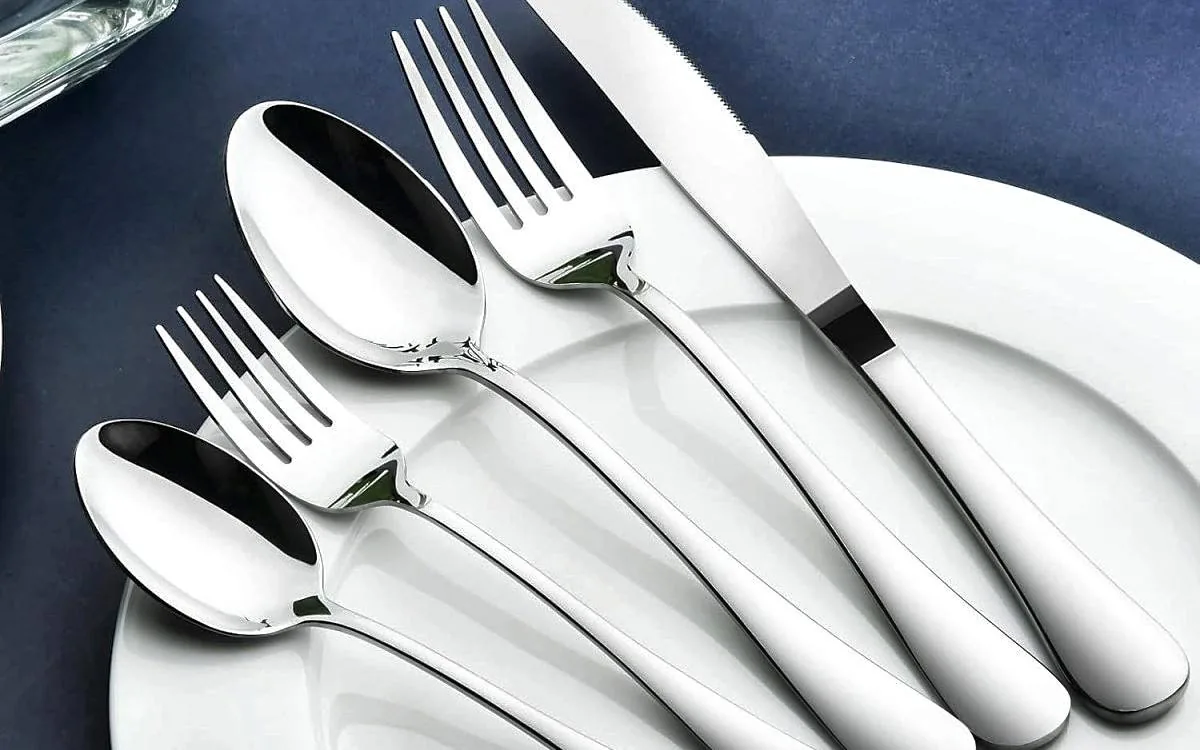
Almost every flatware listing says "stainless steel" and stops there. That is like saying a car is "metal." The two grades you will actually encounter — 18/10 and 18/0 — behave differently in your hand, in the dishwasher, and on the table after a few years. One number explains all of it, and it is the number most listings leave out.
Quick verdict
- Choose 18/10 if: you use the set daily, you want a bright finish that survives years of washing, and you are willing to pay roughly 1.5–3× the price of an 18/0 set.
- Choose 18/0 if: the flatware is for occasional use, a rental, or a short-term setup where cost matters more than long-term appearance.
- The trick that settles it: a magnet. 18/0 is strongly magnetic, 18/10 is essentially not.
- The catch: "18/10" and "18/0" are alloy recipes, not promises about thickness. A thin 18/10 piece can feel worse in the hand than a well-made 18/0 one.
What the two numbers actually mean
The fractions describe the alloy. The first number is chromium, which gives stainless steel its corrosion resistance. The second is nickel, which adds brightness, toughness, and resistance to staining and pitting.
| Chromium | 18% | 18% |
|---|---|---|
| Nickel | 10% | 0% |
| Magnetic | Essentially no | Yes, strongly |
| Finish over time | Holds a bright, uniform polish | Duller, more prone to spots and discoloration |
| Corrosion resistance | High | Moderate |
| Typical price | Higher | Lower |
| Dishwasher tolerance | Good | Acceptable, with more care |
Nickel is the expensive ingredient, which is the whole reason the two grades exist at different prices. It is also why some listings describe a set as "nickel free" as if that were a feature — technically it is a cost saving, not an upgrade.
The magnet test, and its limits
This is the most practical thing in this article. Take a kitchen magnet — a fridge magnet is strong enough — and touch it to a fork handle and a spoon bowl.
- Strong pull: the piece is 18/0, or at least contains no nickel worth speaking of.
- No pull, or barely any: consistent with 18/10.
One honest caveat: 18/10 flatware can pick up a faint magnetic response because of the stamping and bending used to shape it. A very weak attraction does not prove the piece is 18/0. A firm, obvious pull does. So treat the magnet as a filter, not a laboratory test — if a "18/10" set sticks hard to the magnet, that claim deserves doubt.
Weight is the second tell
Grade tells you about corrosion, not thickness. Two 18/10 sets from different factories can feel different in the hand because one used thicker blanks. That is why weight per piece is the second thing to check — and why we track it in every flatware review.
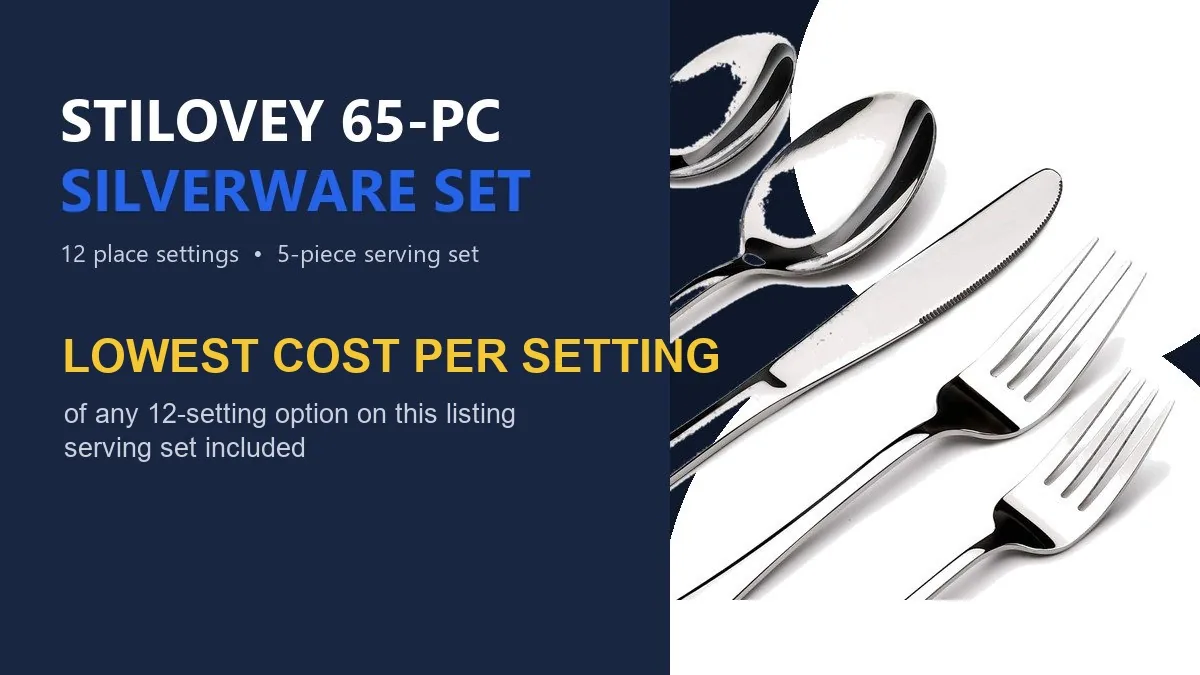
In our Stilovey 65-piece set review, for example, the set averages about 2.0 oz per piece. That is on the light side for restaurant-style flatware, and it matters more than the piece count: a light fork bends in a firm grip and feels cheap long before it corrodes.
A practical benchmark: 18/10 dinner forks commonly land in the 1.8–2.4 oz range depending on design, and premium hotel-weight patterns run heavier. If a listing gives you no weight at all, that silence is itself information.
Why so many listings hide the grade
"Stainless steel" is accurate for both grades, so a seller is not lying by omitting the ratio. But if the product were 18/10, most brands would say so prominently — it is a selling point you have to pay for. When a listing says "18/10 stainless steel" nowhere, uses phrases like "food grade" or "nickel free," and prices the set unusually low per place setting, the grade is usually 18/0.
That is not automatically a reason to walk away. It is a reason to price the set honestly: you are buying a serviceable everyday set, not an heirloom.
What to do when the listing says nothing
Most flatware listings will not answer the grade question directly, so the practical move is to stop looking for a label and start pricing the set as if it were 18/0. Compare it against other 18/0 sets on cost per place setting. If it still wins, buy it knowing what you are getting. If it only wins because you assumed it was 18/10, that is the wrong purchase.
Two signals are worth reading carefully. A set that advertises "nickel free" is telling you it is 18/0 in the most roundabout way possible — nickel is the upgrade, so its absence is a cost decision, not a health feature. And a set that never mentions weight, grade, or steel thickness anywhere in the listing is usually not hiding an advantage.
None of this makes an unlabelled set a bad buy. A cheap per-setting 18/0 set that holds up for five years is a perfectly rational purchase for a first apartment. The error is paying an 18/10 price for an 18/0 product because the listing was vague enough to let you assume.
Cost per setting, not cost per box
Piece counts are constructed to sound impressive. A 65-piece set sounds far bigger than a 40-piece set until you divide both into usable place settings and serving pieces. The only comparison that travels between sets is cost per place setting.
| Set | Grade | Settings | Cost per setting, relative |
|---|---|---|---|
| Entry set, 65 pieces | 18/0 (likely) | 12 | Lowest of the three |
| Mid set, 40 pieces | 18/10 | 8 | About level with the entry set |
| Better set, 60 pieces | 18/10 | 12 | Highest of the three |
The middle row is the interesting one: on a per-seat basis, 18/10 does not have to cost more than 18/0 here — it just buys fewer settings and no serving pieces. Which brings the decision back to a question of quantity versus material, not price.
Who should buy which
Buy 18/10 if this is the set you will use every day for the next decade, if you host, and if you care that the pieces still look bright after years of dishwasher cycles.
Buy 18/0 if you need a lot of place settings on a budget — a rental, a holiday house, a first apartment — and you are comfortable replacing the set sooner.
Check the weight either way. A heavy 18/0 set feels better in the hand than a thin 18/10 one, and the difference in daily use is larger than the difference in nickel content.
Frequently asked questions
Is 18/0 flatware good enough for everyday use?
For most households, yes. It will not rust under normal care, and it handles daily meals fine. The visible difference shows up over time: a duller finish, more water spotting, and a higher chance of pitting if pieces sit wet or hold salty, acidic food for long stretches.
How can I tell whether my flatware is 18/10 or 18/0?
Use a magnet first — strong pull means 18/0, essentially none is consistent with 18/10, and a very faint response can happen on stamped 18/10. Then check weight and polish, and look for a grade stamp on the back of the handle.
Is 18/10 flatware worth the extra cost?
For daily use and long ownership, yes: better corrosion resistance, a brighter finish, and more heft. For occasional use or a rental, the premium is hard to justify.
Can 18/10 flatware go in the dishwasher?
Yes, and it tolerates it better than 18/0. Two habits help either grade: don't leave pieces sitting wet in the basket, and don't wash silver and stainless in the same load, since the two metals can react and stain the stainless.
Sources
- Stainless steel flatware grade convention: 18/10 designates 18% chromium with 10% nickel, and 18/0 designates 18% chromium with no nickel. This is the trade designation flatware makers and metal suppliers use for cutlery steel — it is not a laboratory result produced for this page.
- Stilovey 65-piece set — the set used as the worked example for the price-per-piece arithmetic; prices are publicly listed prices observed on November 7, 2026.
How this comparison was researched
This article is built from the alloy specifications published by flatware manufacturers, material guidance from stainless steel suppliers, and the specs and owner feedback in the product listings we review. The price table uses publicly listed prices observed on November 7, 2026 and will change. We did not run laboratory corrosion tests, and we do not claim to have done so.