Small Appliances · Product profile
Casabrews Tornado Basic: 35 Steps, Two Portafilter Sizes
Most espresso machines are not limited by their pump — they are limited by the grind going into them. This grinder is the cheapest way to fix that, and it doses straight into both 51 mm and 58 mm portafilters.
Affiliate disclosure: Some links on this page are affiliate links. If you buy through them, we may earn a commission at no extra cost to you.
Quick verdict
- What it is: a 150 W conical burr grinder with a 35-step dial, a stainless housing, a 0.55 lb hopper and a cradle that fits 51, 54 and 58 mm portafilters.
- Best for: anyone moving from a pressurised basket to a real one, or adding fresh-ground coffee to a machine whose built-in grinder cannot be upgraded.
- Skip it if: you want timed or weight-based dosing, single-dose low-retention workflow, or a big hopper.
- Owner signal: 4.0 / 5 across 140 ratings — a thin base, and a lower average than the machines it is meant to grind for. Treat it as an early-adopter purchase.
Prices change daily — check the current price on the listing.
Check price at AmazonOpens the retailer's product page. Commission may be earned.
How this page was made: specifications come from Casabrews' Tornado Basic product page and a retail spec listing, checked in November 2026 and linked in Sources. The model is new, so published owner evidence is thin; we say so rather than dressing up a small sample. We did not grind with it. See how we research.
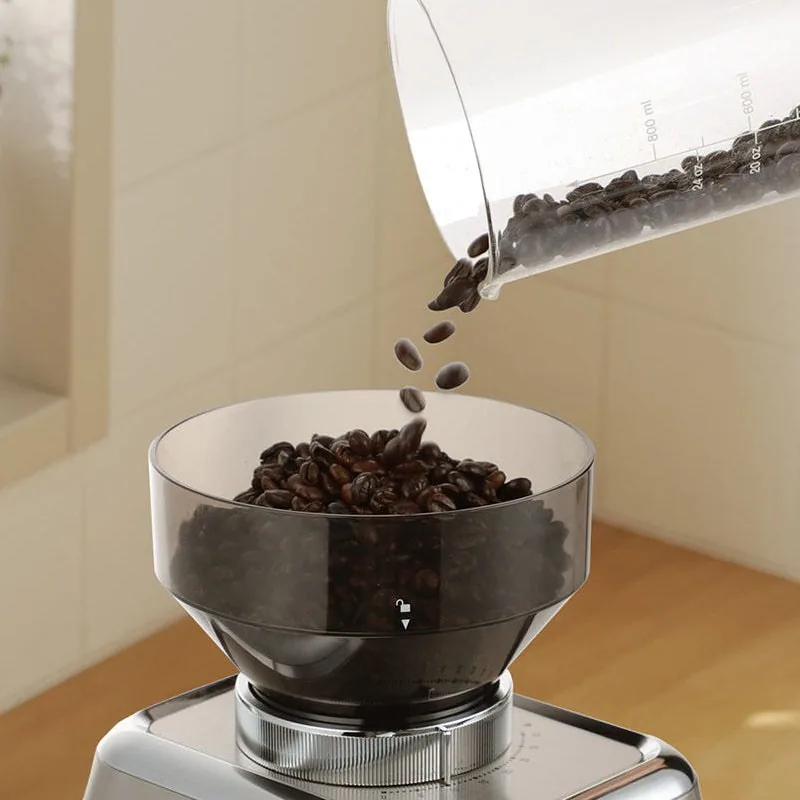
Manufacturer image: loading the Tornado Basic hopper. The 35-step dial sits directly under the hopper. This site has not photographed the unit. — Source: casabrews.com
At a glance
| Type | Electric conical burr grinder |
|---|---|
| Burrs | Stainless steel conical |
| Grind settings | 35, stepped dial |
| Portafilter compatibility | 51 mm, 54 mm and 58 mm cradle |
| Power | 150 W, 120 V / 60 Hz |
| Hopper | 0.55 lb (about 250 g) |
| Weight | 5.06 lb |
| Dosing | Push-button, auto or manual; timer adjustable 12 to 60 seconds, 12-second default |
| Dimensions | 13.23 in tall × 5.63 in wide × 9.06 in deep |
| Housing | Stainless steel |
| Safety | 15-minute auto shut-off, overheat protection, hopper error alert |
| Price | Not listed here — check the retail link |
Casabrews also sells a 77-setting TORNADO with an LCD and timed dosing; this is the stripped version of the same idea. The question is not which is better, but whether the extra settings and the display are worth paying for on the machine you already own.
Why the grinder is the part that limits your machine
A 20-bar pump is the loudest number on any espresso listing and one of the least useful. Pressure is easy; consistent particle size is hard. If half your dose is fines and half is boulders, water finds the easy path and the shot runs fast no matter what the gauge says. That is why the same machine can produce a good shot with one grinder and a sour, thin one with another.
This matters most the day you move from a pressurised basket to a real one. Pressurised baskets compensate for a coarse, uneven grind; non-pressurised baskets do not. If you have just bought a 51 mm or 58 mm machine with single-wall baskets, the grinder stops being an accessory and becomes the difference between espresso and disappointment.
35 steps, and what that buys on each basket size
Thirty-five steps is a genuinely useful range for espresso — fine enough to choke a shot, coarse enough for a filter brew. It is not the same as 77 steps on the bigger TORNADO: more steps means smaller jumps between settings, which matters when a single click can move a shot by several seconds. On a 51 mm basket the window is wider and 35 is comfortable; on a 58 mm commercial basket the window narrows and you will feel the step size.
Note also that Casabrews publishes 35 settings on the product page and 15 in one of its own launch posts. We quote the product page and the retail spec sheet, and flag the discrepancy so you are not surprised by the dial in person.
The cradle is the underrated feature
Grinding into a portafilter instead of a cup removes a transfer step, a mess and a variable. The Tornado Basic supports 51, 54 and 58 mm, which covers most machines in this price band — including the 51 mm Gevi models we cover and Casabrews' own 58 mm machines. If you own a 54 mm Breville-style basket, this is one of the few cheap grinders that will dose into it directly.
150 W, 0.55 lb hopper, 13 inches tall
A 150 W motor is modest on paper — burr size, rpm and geometry also set throughput, so expect slower grinding than a bigger machine, though no measured throughput sits behind this wattage figure. Expect the motor to prefer shorter bursts. The 0.55 lb hopper is a deliberate single-bag size: enough for a week of shots, small enough that beans do not sit in the hopper going stale. At 13.23 inches tall it will not fit under a low cabinet either; check the same clearance you checked for the machine.
Retention is not published. Any grinder in this class holds some ground coffee between the burrs and the chute, and how much is the difference between a consistent first shot and a stale one. That is exactly the kind of number a spec sheet will not give you, and the reason owner reports matter more than the dial count here.
A new model with a thin evidence base
This is a recent release, and its review count is far below the espresso machines we cover. That cuts both ways: there is not yet enough owner data to know how the burrs hold up after a year or how the dial feels in daily use. Buy it as an early-adopter purchase — the specs fit the job, the track record is not established yet.
Pros
- 35 steps — a usable espresso range at this price
- Doses straight into 51, 54 and 58 mm portafilters
- Conical stainless burrs and a stainless housing
- 15-minute auto shut-off, overheat protection, hopper alert
- Small footprint: 5.63 in wide
Cons
- Thin owner evidence: 140 ratings, 4.0 / 5
- 150 W — low power for batch grinding
- 0.55 lb hopper is small for batch brewing
- Retention not published
- No timed or weight-based dosing
Who should buy it
| You just moved to a non-pressurised basket | Yes — this is the missing piece. |
|---|---|
| Your machine has a 51 mm or 58 mm portafilter | Yes — it doses directly into either. |
| You want weight-based dosing | No. Look at the 77-setting TORNADO or a single-dose grinder. |
| You brew filter coffee for a crowd | No — the hopper is small and this is an espresso-first grinder. |
| You want a proven track record | Wait. The model is new and the review base is thin. |
If this is not the one
If you do not own an espresso machine yet, start there: the Gevi 20 Bar Compact and the Casabrews 3700 comparison both cover 51 mm machines this grinder fits. If you want espresso and grinding in one body and one purchase, the Gevi with built-in grinder is the other route — with the caveat that its grinder cannot be upgraded.
Bottom line
Buy it if you own a 51 mm or 58 mm machine with a real basket and you are still grinding with a blade grinder or pre-ground. That upgrade changes your coffee more than any machine purchase at this price. If you want dosing by weight or a long track record, wait for more owner evidence or pay for the bigger TORNADO.
Frequently asked questions
Will it fit my espresso machine?
It doses into 51 mm, 54 mm and 58 mm portafilters. That covers most machines in this price band, including the Gevi compact models and Casabrews' own 58 mm machines.
Is 35 steps enough for espresso?
Yes at this price, with one caveat: on a 58 mm commercial basket the gaps between steps are wider than on a 51 mm basket, so dialling in takes more patience. More steps means finer adjustment, not better burrs.
Does it have timed dosing?
No. You grind by holding the button. Timed and weight-based dosing are features of the larger, more expensive TORNADO model.
How big is the hopper?
0.55 lb, about 250 g — enough for a week of espresso, deliberately small so beans do not sit and go stale.
How often should I clean it?
Casabrews does not publish a cleaning interval. In practice, brush the chute weekly and avoid flavored or oily beans, which clog burr grinders faster than anything else.
Sources
- Casabrews: Tornado Basic — 35 grind settings claim, 51/54/58 mm compatibility, 150 W, auto shut-off and safety features
- Casabrews: TORNADO (77-setting) for comparison — burr type, hopper capacity, grind ranges
- Retail listing for the grinder profiled here — current price and customer feedback
How this page was researched
Research-based profile, not a hands-on test. We did not measure pressure, grind consistency, temperature stability or brew time. Specifications come from the manufacturer's and retailer's published pages; where a value is not published we say so instead of estimating it. Prices and availability change without notice — confirm on the listing before buying.