Cookware
Cookware Set Sizes: What a 3, 6 or 14-Piece Count Actually Buys
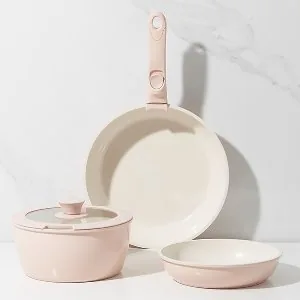
Piece counts are packaging decisions. A six-piece set can hold fewer usable pans than a three-piece set, because a lid counts as a piece. Here is how to count what you will actually cook with.
Affiliate disclosure: Some links on this page are affiliate links. If you buy through them, we may earn a commission at no extra cost to you.
Prices change daily — check the current price on the listing.
See a full set at AmazonOpens the retailer's product page. Commission may be earned.
A cookware set's piece count tells you how many objects are in the box. It does not tell you how many things you can cook with at once, and those two numbers are often far apart.
The gap comes from three conventions that many brands use and almost none explain: lids count as pieces, detachable handles count as pieces (once, for the whole stack), and serving or storage accessories count too. Once you know the rules, the numbers stop being confusing. They are just not a measure of capacity.
The three conventions that inflate a piece count
Lids count
A set described as six pieces is usually three pots plus three lids. The pots are the cookable objects; the lids are accessories that make them useful for steaming and simmering but do not add a burner. This is the single biggest source of disappointment: buyers expect six places to cook and get three.
Shared handles count
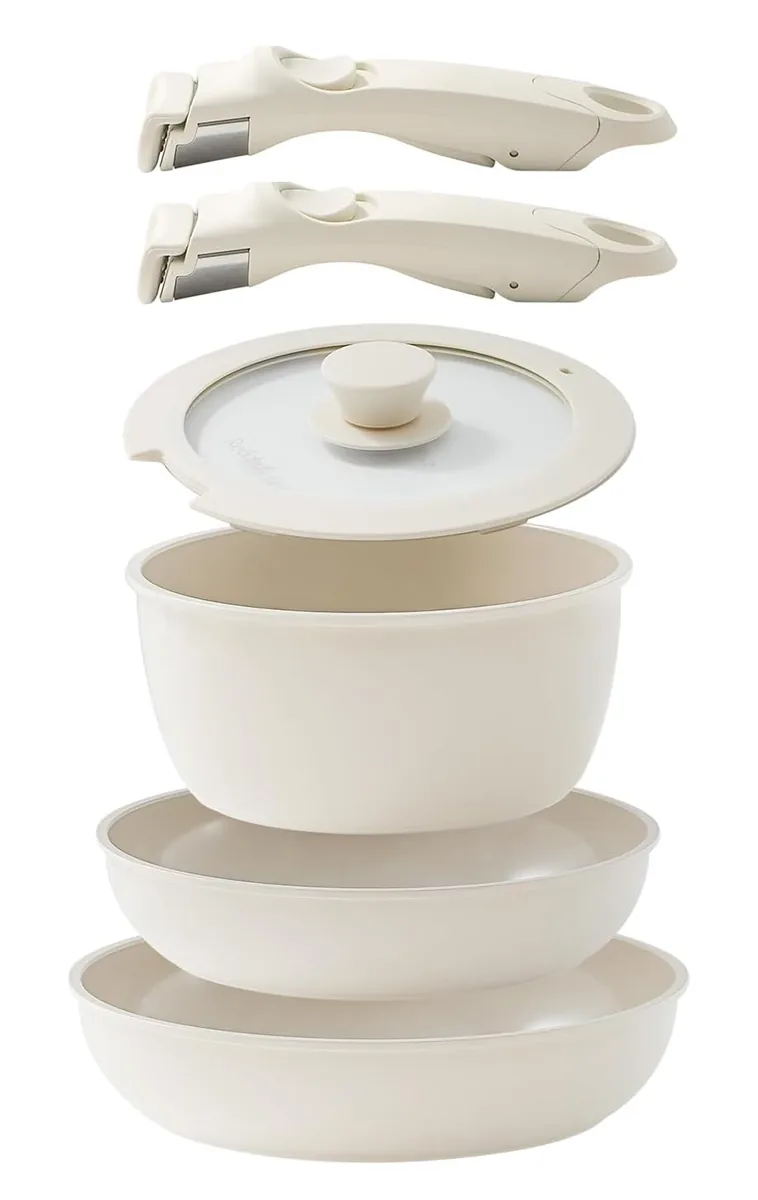
Sets with a removable handle often describe themselves as large sets because the box contains many bodies. In a sixteen-piece detachable-handle set, the pieces are the pan bodies, the pots, the lids and one handle. That string of numbers buys storage efficiency, not cooking surface.
Accessories count
Spatulas, trivets, storage lids and steaming inserts are sometimes included in the total. None of them are vessels. Read the piece list line by line and count only the items with a flat bottom that can hold food.
| What you can actually cook with | Typical marketing count | What is in the box |
|---|---|---|
| One frying pan, one saucepan | 3-piece set | 2 vessels + 1 lid |
| Three pots | 6-piece set | 3 vessels + 3 lids |
| Three frying pans | 3-piece frying set | 3 vessels + 0 lids |
| Two pans and three pots | 14-piece set | 5 vessels + 5 lids + accessories |
| A nesting stack with one handle | 16-piece set | Bodies + lids + 1 removable handle |
These counts are the patterns we saw across the sets we checked, not a standard: a brand is free to count its own way, so the box list on the listing you are buying is the only definitive number.
Notice the third row. A three-piece frying set and a three-piece pot set are the same count and nothing alike: one gives you three pans with no lids, the other gives you two vessels and a lid. The number is identical; the cooking is not.
The count that matters: cookable vessels
Before comparing sets, convert each one to a single number: how many vessels can sit on a burner at the same time. Then add a second number: how many of those can be covered with a lid that came in the box.
For most two-person households, three cookable vessels is the practical minimum in our judgment, not an industry standard: a frying pan in the 9 to 10-inch range, a saucepan around 2.5 quarts, and one larger pot or deep pan for pasta, soups and braises. With lids on two of them you can boil, simmer and fry in the same half hour without waiting for a pan to be free.
Four vessels adds comfort rather than capability: a second frying pan size, usually an 8-inch for eggs and a 11-inch for searing, is the most common fourth piece. Beyond five, the additions are mostly larger duplicates of something you already have, which is why big sets spent most of their life stacked.
Which count fits which kitchen
The 3-piece set
Best for one or two people, a small kitchen, or a first flat. Two vessels and one lid cover eggs, a pan sauce, soup for two and pasta for two. The limit appears when you cook a dish that needs both a sear and a simmer at once, because you only have one pan that can be moved to the oven or covered.
The 6-piece set
Three pot sizes, each with a lid. Good for rice, sauces and reheating in parallel, and weak on frying because pots are round and deep. If you buy a six-piece set, plan on adding one frying pan separately; that is the configuration most people end up with anyway.
The frying set
Three pans, no lids. This is the right purchase for someone who already owns pots and has been cooking in one worn pan. Understand the lid gap before you buy: a universal lid rarely seats properly on a 9.5-inch pan, and owners report liquid spilling onto the cooktop when it does not.
The 10 to 14-piece set
Family cooking, batch cooking, and replacing an entire cabinet at once. You get multiple frying pan sizes plus a large pot, which is what makes cooking several components of one meal possible. The cost is storage: a 14-piece set that includes lids takes a full lower cabinet or a dedicated rack.
The detachable-handle set
Built for small kitchens where storage is the binding constraint. One handle serves every body, so the stack nests flat. The trade is a step in every recipe: to move a pan from the cooktop to the oven, you take the handle off and put it back on. Worth it if space is scarce, unnecessary if it is not.
Price per piece is the wrong metric
A large set looks cheaper per piece than a small one almost every time, because the denominator is inflated by lids and accessories. Divide the price by the number of cookable vessels instead and the gap narrows, sometimes disappears.
Two further costs belong in the comparison and never appear on a listing: the cabinet space a stack consumes, and the replacement horizon of the coating. A coated pan that lasts about two years of daily use in the size you cook in most is a better purchase than five pans that age unused. Whether the coating is the right material at all is covered in the ceramic versus stainless comparison, and the practical lifespan numbers are in how long ceramic nonstick lasts.
What real owners say
When you look at Amazon's best-selling cookware sets, the piece-count gap between marketing and reality is visible in the reviews.
The Redchef 16-piece set is the extreme example: 1,328 ratings at 4.5 stars, but when you count the actual cookware vessels, the "16 pieces" includes lids, pan protectors, and a detachable handle — not 16 separate pans. Owners who expected a full set of cookware occasionally express surprise, but most say the piece count is fair given the accessories included.
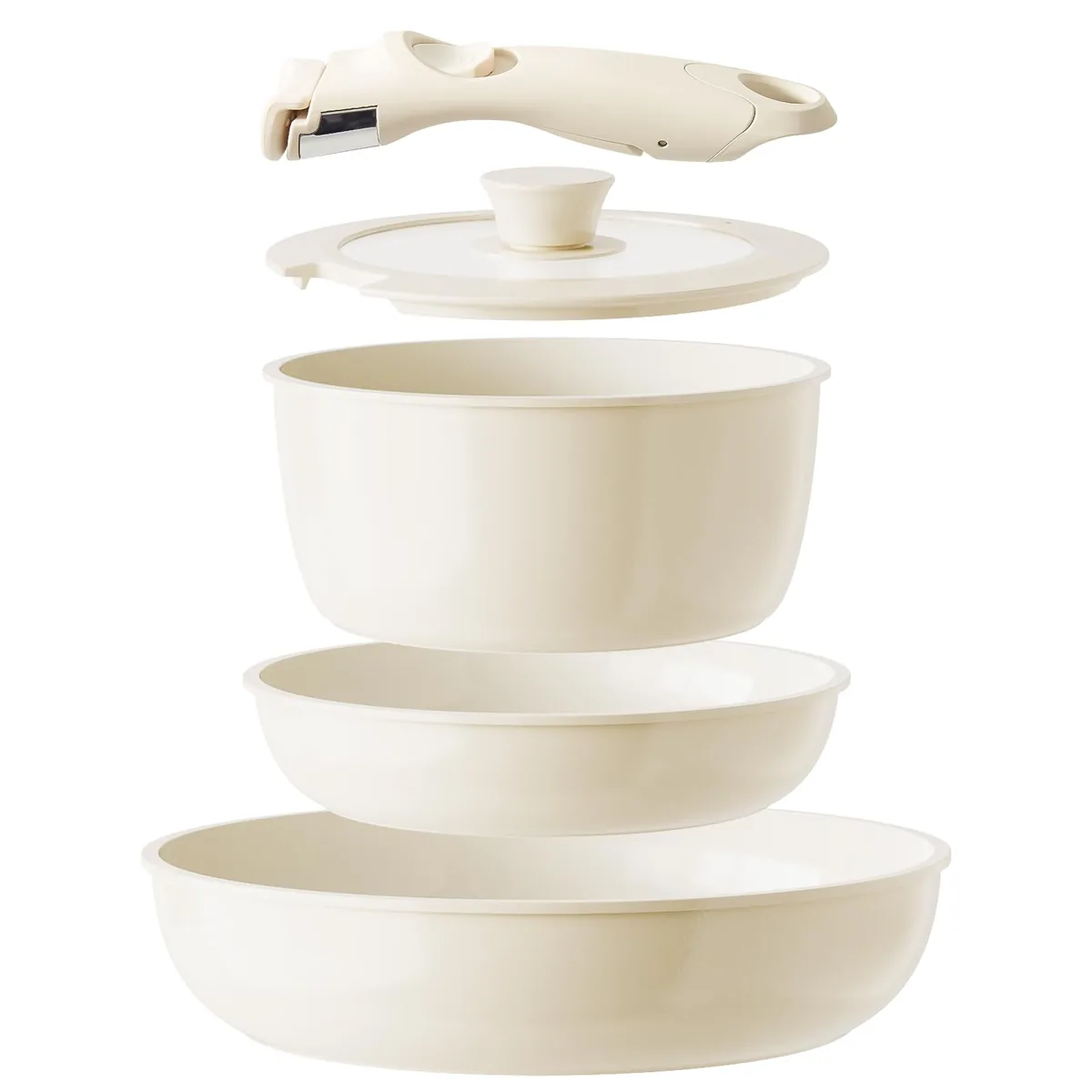
The Redchef 5-piece set is the more honest value: 3,267 ratings at 4.5 stars, and the five pieces are two saucepans, one frying pan, one lid, and one handle — a compact starter set that fits a small kitchen. The reviews consistently call it "enough for one or two people" and note that if you cook for a family you will need to add a larger stock pot.
The broader pattern across top-selling sets: a 6-piece set typically contains 2 pans, 2 lids, and 2 accessories, while a 14- or 16-piece set inflates the number by counting every lid, trivet, and protector. A 3-piece set, by contrast, usually means exactly 2 cookware vessels and 1 lid — which is why the smaller sets are sometimes the better value if you only need a frying pan and a saucepan.
Count vessels and lids separately. The box tells you the piece count; the burner tells you the truth.
If you want to see how one brand prices a three-vessel set against a five-piece stack, the listings are on the same page.
Compare set counts on the listingLid coverage: the spec nobody lists
If there is one line to check before buying a set, it is whether every vessel has a matching lid. A lid changes what a pan can do: simmer without reducing, steam vegetables, keep a braise moist, and hold heat while you plate something else. A pan without a lid is, in practice, a frying pan: it can still simmer uncovered, reduce a sauce, and finish something on the stove, but it cannot do the covered jobs, which is why the lidded vessels in a set matter more than the unlidded ones.
The pattern across listings is consistent: pot-focused sets include a lid for each pot, frying-pan sets include none, and mixed sets include lids for the pots but not necessarily for the frying pans. Where a lid is included, check whether it is glass and whether the listing excludes it from oven use — most glass lids are not oven safe even when the pan is rated to over 400 degrees Fahrenheit.
A short way to decide
- Count the vessels you cook in during a normal week. If it is one pan and one pot, buy small.
- Check your largest burner diameter. A pan much wider than the burner cooks unevenly at the edges.
- Decide whether storage or counter space is scarcer. If storage, consider a detachable-handle set; if counter, buy fewer pieces.
- Confirm lid coverage per vessel, not per set.
- Divide the price by vessel count before you judge value.
Recommended products
Two counts, two kitchens
This is the same brand at both ends of the range, which makes the trade between coverage and storage easy to see.
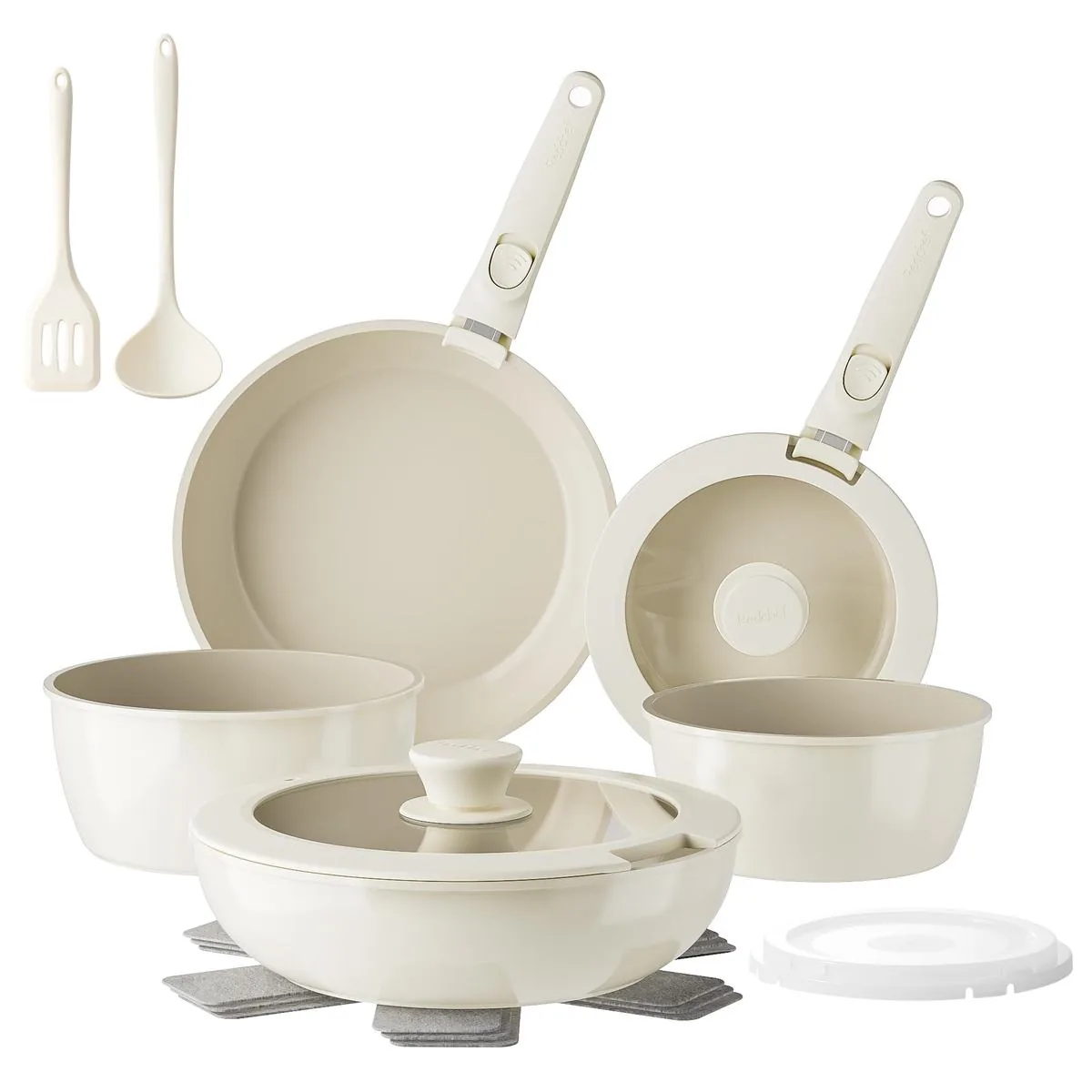
Fewer pieces
Redchef 5-piece ceramic set
Small count for a small kitchen: enough vessels to cook a meal, few enough to store without a rack.
Check current price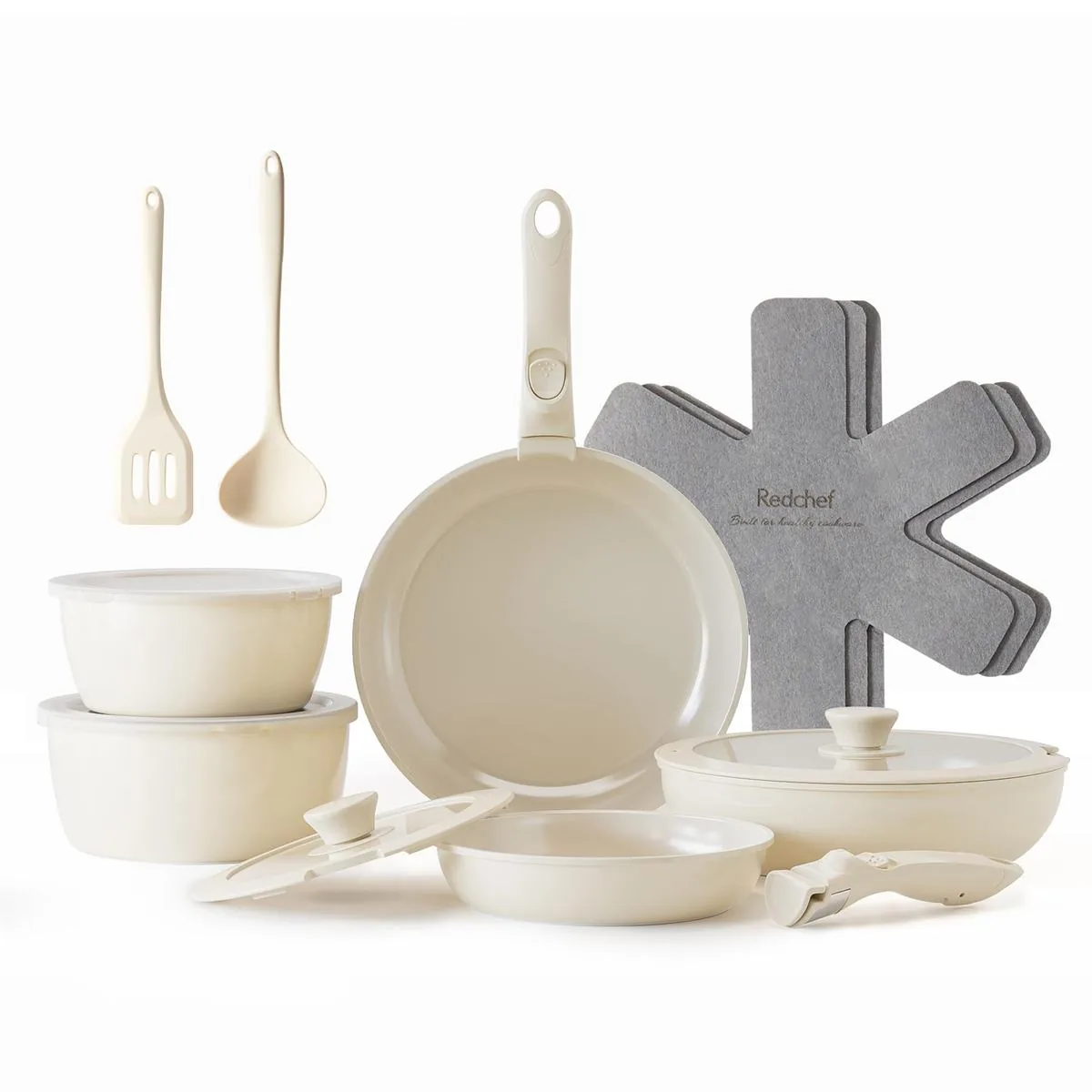
Currently unavailable
Redchef 16-piece set
This set was the reference behind our piece-count example. It is out of stock on Amazon as of November 2026, so the button below goes to the closest in-stock set in the same range.
See the 5-piece setAffiliate disclosure: We may earn a commission if you purchase through these links, at no additional cost to you.
Frequently asked questions
Why does a 6-piece cookware set only have three pans?
Because lids are counted as pieces. A six-piece set built from three pots almost always means three pots plus their three lids. The cookable capacity is three vessels, not six, and that is the number that decides what you can cook at the same time.
Is a 14-piece set better than a 6-piece set?
Only if you need the additional pan sizes. A 14-piece set typically adds larger frying pans and a bigger pot, which suits family cooking and batch work. For one or two people, the extra pieces are more likely to occupy cabinet space than to be used weekly.
Do cookware sets include lids for every pan?
No, and this is where many buyers are surprised. Frying-pan-only sets commonly ship without lids, while pot-focused sets include a lid for each pot. Check the piece list rather than the total, and treat a set of frying pans as having zero lid coverage.
What does a detachable handle do to a piece count?
It inflates it. A set where pots and pans share one removable handle can list far more pieces than the number of vessels, because the stack contains bodies plus one handle plus lids. The benefit is storage, not extra cooking capacity, and the cost is swapping the handle between pieces.
How many cookware pieces does a two-person kitchen need?
Three cookable vessels cover most of it: one frying pan around 9.5 inches, one saucepan around 2.5 quarts, and one larger pot or deep pan for pasta and stews. That is typically sold as a 3-piece or 6-piece set depending on how the lids are counted.
Should I count price per piece or price per vessel?
Count per cookable vessel. A set sold as fourteen pieces may contain nine vessels, so dividing the price by fourteen understates the real cost per pan. Divide by the number of things you can actually put on a burner.
Sources
- Retail listing — 16-piece detachable-handle set, piece list and rating count, checked November 11, 2026; the set is currently unavailable on Amazon
- Retail listing — 5-piece set, piece list, checked November 11, 2026
- Manufacturer listing pages for 3-piece, 6-piece and 14-piece ceramic lines: included components, lid coverage, pan diameters, checked November 11, 2026
- Owner review notes on universal-lid fit and liquid spillage on 9.5-inch pans, read November 11, 2026
How this page was researched
This is a research-based guide, not a hands-on test. We have not bought or cooked with these sets. Piece lists, vessel sizes and lid coverage come from the manufacturer's published listings; storage and usability observations come from owner reviews. We do not publish invented scores. Prices and availability change without notice — confirm on the listing before buying.
Keep reading