Cookware
How Long Does Ceramic Nonstick Actually Last?
Ceramic nonstick is not a type of pan. It is a thin layer sprayed onto one, and that layer has a service life. Here is what owners report at year one and year two, what shortens it, and how to test whether yours is finished.
Affiliate disclosure: Some links on this page are affiliate links. If you buy through them, we may earn a commission at no extra cost to you.
Prices change daily — check the current price on the listing.
See a ceramic set at AmazonOpens the retailer's product page. Commission may be earned.
Ask how long ceramic nonstick lasts and most listings answer with a warranty, not a lifespan. The honest answer comes from two places: what the material actually is, and what owners say after a couple of years of cooking on it.
Those two answers agree more than you would expect. Ceramic-coated pans are an aluminum body with a thin mineral layer on top, and the layer is what provides release. It is not welded into the metal and it cannot be restored. So the useful question is not "will it last" but "how many years of daily cooking does it have, and what do I do at the end".
What "ceramic nonstick" physically is
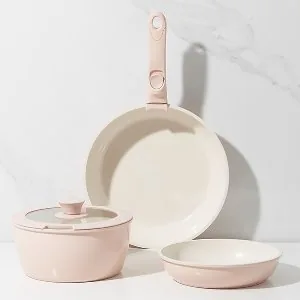
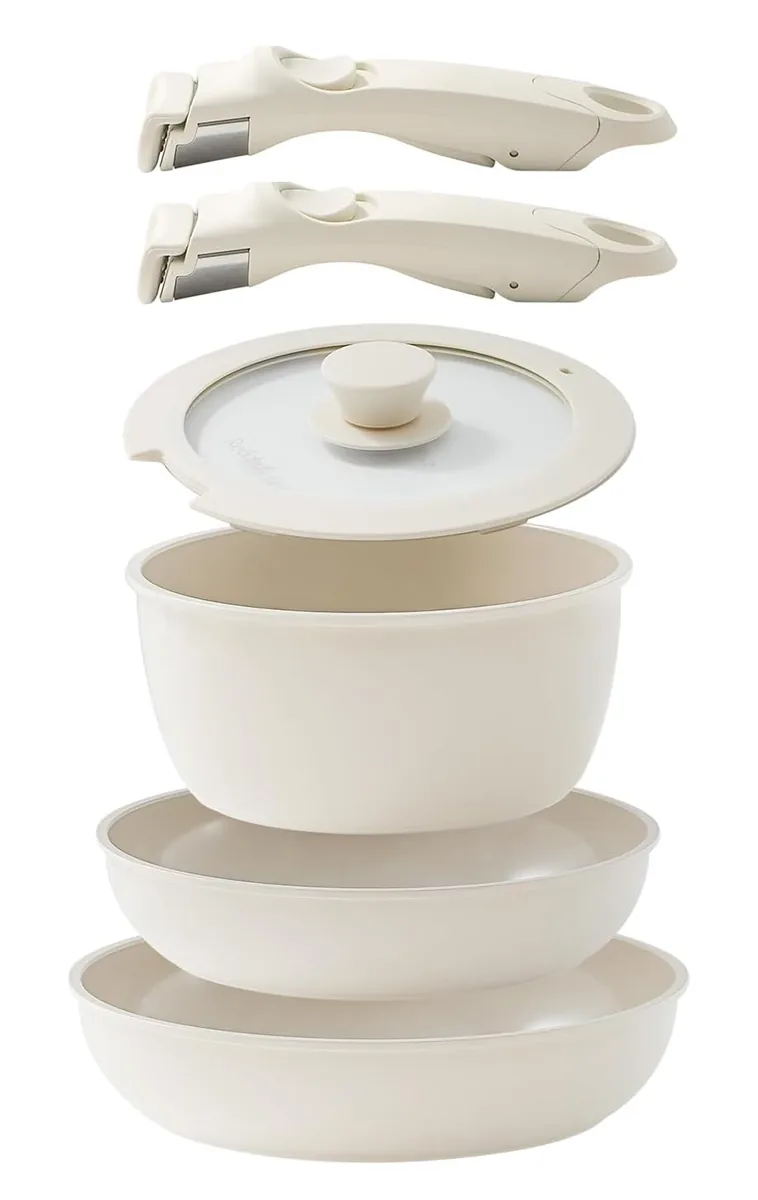
The body is forged or pressed aluminum, which is why these pans are light and heat fast. On top sits a coating sprayed on in layers and cured: brands describe two or three coats, and Redchef's listings specify a triple-layer process with a mineral-based coating marketed as free of PFAS, PTFE, PFOA, lead and cadmium. The pan is then finished with a stainless handle, often double-riveted.
That construction is good news for weight and even heating, and it is the reason a coated aluminum pan can cost a fraction of a clad stainless one. It is also the reason the surface has a life: the coating is a film, roughly the thickness of a heavy paint layer, sitting between your food and the metal.
Compare that with stainless steel, which has no film at all and therefore no expiry date, at the cost of needing fat and temperature control to release food. If you want the version of this argument with numbers on both sides, it is in ceramic versus stainless.
The two-year number, and where it comes from
The most useful data point we have is not a spec sheet. It is an owner review: a buyer using Redchef pans across rental properties wrote that she was on her fourth set, that the first set had been cooked on daily at home for about two years, had stained, and had stopped being non-stick. Pans from the same order used less often still worked. Her conclusion was not that the product failed, it was that ceramic does not last forever and the price reflects that.
One review is not a survey, but it matches the material logic closely enough to use as a planning number:
| Usage | What owner reports describe | What to watch |
|---|---|---|
| Daily, one pan doing most of the work | Release starts to weaken somewhere in the 12–24 month range | Sticking in the center, gradual color change across the cooking area |
| Three or four times a week | Some owners report past year three; no typical figure has been established | Rim wear from stacking before surface wear |
| Occasional use, weekend cooking | Less frequent use extends life; five years is not an established figure | Storage damage, not cooking damage |
The pattern to notice is that lifespan tracks contact time and heat cycles, not calendar age. Two pans bought the same day can be in different condition a year later, and that is normal for a coating. The ranges above describe vessels cooked at moderate heat; a pan that gets seared at high heat most days wears faster, and the owner reports below put that case at months rather than years.
Four habits that end the coating early
1. Empty-pan preheating
Heating a dry pan to check whether it is hot is the most common habit behind early failure. The coating has nothing to conduct heat into, so the surface temperature climbs past what the layer tolerates while the metal beneath it is still catching up. Add a teaspoon of oil before the pan goes on the burner, and let the oil tell you when it is ready.
2. Metal utensils and hardened spatulas
Listings mention metal tolerance, and owners who understand the coating use wood or silicone regardless. A ceramic layer is thin, so a metal edge that catches on a chip turns a chip into a scratch. Redchef reviewers describe using only wood on purpose for exactly this reason.
3. Stacking pans bare
One owner rated the pans highly and still warned about stacking them directly: small chips appeared around the rims where pans sat on each other. A folded towel or a paper plate between pans costs nothing, and rims are where a coating fails first because they take the contact load.
4. Thermal shock and abrasive cleaning
Running a hot pan under cold water, or scrubbing with a steel pad or scouring powder, attacks the layer more directly than cooking does. Wait for the pan to cool, use a soft sponge and mild detergent, and skip the abrasive cream cleanser even when something has burnt on. Soaking beats scrubbing.
There is a fifth, slower habit worth flagging because listings disagree with themselves about it: the dishwasher. Every set here is marked dishwasher safe, and the brand's own care note recommends hand washing to extend coating life. Detergent and a hot drying cycle act on the same layer that provides release, and pans knocking together in a rack reproduce the stacking problem mechanically. If you want maximum life, hand wash.
If your current pan is past the point of testing, the cheapest way back into a working surface is a small set rather than a full cabinet.
Check the 5-piece optionThree checks for how the coating is wearing
You do not need to guess. Each of these takes under five minutes and answers a different question. None of them is a verdict on its own: heat, oil and residue all move the result, so read them as signals to stack up rather than a pass/fail you run once.
The egg test
Heat the pan on medium with a little oil, crack one egg, and leave it for thirty seconds without moving it. On a working coating the white sets and slides when nudged. If the white welds itself to the surface in the center while the edges are still liquid, the release layer is compromised there, and that is the area you cook on most. Temperature and oil change this result more than the coating does, so run it at the heat you normally cook at before you read anything into it.
The water-drop test
Drop a few drops of water into a warm pan. On a surface with intact release, water beads and skitters. On a worn or residue-sealed surface, it sits flat and spreads. How the water behaves depends on how hot the pan is as much as on the surface — a hot pan can skitter water over a coating that is already failing — so compare it against a pan you know is healthy, and do it on one you have just washed and dried.
The visual check under raking light
Hold the pan so a light source runs across the interior at a shallow angle. A healthy coating looks uniform with a dull satin sheen. A coating that is wearing shows a duller, slightly mottled band in the middle, sometimes with a visible boundary where the cooking area ends. Stains are cosmetic; a change in texture across the whole cooking zone is not.
If two of the three point the same way, that is a reasonable signal rather than a diagnosis: the pan has become an oil-dependent pan. It can still cook, but it will need fat and lower heat from here on, and it will stick more each month.
What real owners say
The durability question is best answered by reading what Redchef owners report after months of use, because Amazon's rating distribution splits sharply across product lines.
For the 16-piece and 5-piece cookware sets, owners at 6 months and 8 months report the nonstick surface still works well, with the main caveat being that the handles get hot if left on a burner unattended. One long-term reviewer at 15 months reports the pan still works, though the bottom developed a dark patina that can be cleaned with a wool pad.
For the three-pan frying set, the story is different. Ten percent of 1,675 ratings are one-star, and the recurring complaint is that the coating starts to wear off after 2 to 3 months of daily use. One owner describes it directly: after the first month eggs slid out perfectly, but by month two they started sticking, and by month three everything stuck. Another owner notes the pans are "a dream on day one" but degrade quickly with high heat.
The pattern across these reviews puts ceramic nonstick at roughly 12 to 24 months on the covered saucepans and stock pots (where heat is moderate and food is not dragged across the surface), and at as little as 2 to 6 months on the frying pans, where searing and metal spatula use accelerate wear. The key variable is heat: owners who cook on medium-low and use silicone utensils report the longest life, while those who sear on high heat report the fastest coating failure.
What actually extends it
- Medium heat as the default. Ceramic conducts heat into food well enough that high heat mainly shortens the coating's life. Use high only for searing, and preheat with oil.
- Fat instead of sprays. Cooking sprays leave a film that bakes on and seals the pores, which reads as "sticking" long before the coating is actually worn. A teaspoon of oil does the same job and washes off.
- Cool before washing. Let the pan sit for a few minutes off the burner, then wash in warm water. Thermal shock is a real failure mode for a sprayed layer.
- Store with a barrier. A towel between pans, or nesting small inside large, prevents the rim chipping that starts the end of the coating's life.
- Do not re-season. Cast iron benefits from seasoning; ceramic coatings do not. Oil baked onto a ceramic pan leaves a sticky film rather than a protective layer.
Replace or keep?
Keep the pan if the sticking is confined to one spot, the surface stains but has not changed texture, and a normal preheat with oil still releases an egg. Cosmetic staining is not a reason to buy anything.
Replace when release has gone across the whole cooking area, when bare metal shows at a chipped rim, or when you find yourself reaching for extra oil every time. At that point the pan is doing the job of an uncoated pan with worse heat tolerance, and the extra fat it now demands is a running cost you did not budget for. We are not putting a number on it here, because pan prices and how much oil a cook actually uses vary far too much for that to be honest.
One more thing worth saying plainly: buying a 16-piece set does not buy 16 pieces of lifespan. The pan you use daily will age at the daily rate regardless of how many others came in the box. If you cook in one or two pans, a small set plus one good 11-inch pan is the more sensible allocation than a large stack where four pans sit unused and age in the cabinet. That comparison is laid out in the Redchef set size map.
A coated pan is a consumable, not an heirloom: plan on roughly two years for a pot that sees moderate heat, and a fraction of that for a pan you sear on daily. Budget for the replacement and the purchase stops being a disappointment.
Recommended products
Two ways to buy the coating
If you are replacing a worn pan, the question is how much surface you need. A small set covers the everyday pan and pot; a large set covers the cabinet but ages just as fast.
Replacement, minimal
Redchef 5-piece ceramic set
The short route back to a working non-stick surface without replacing a cabinet you already own.
Check current price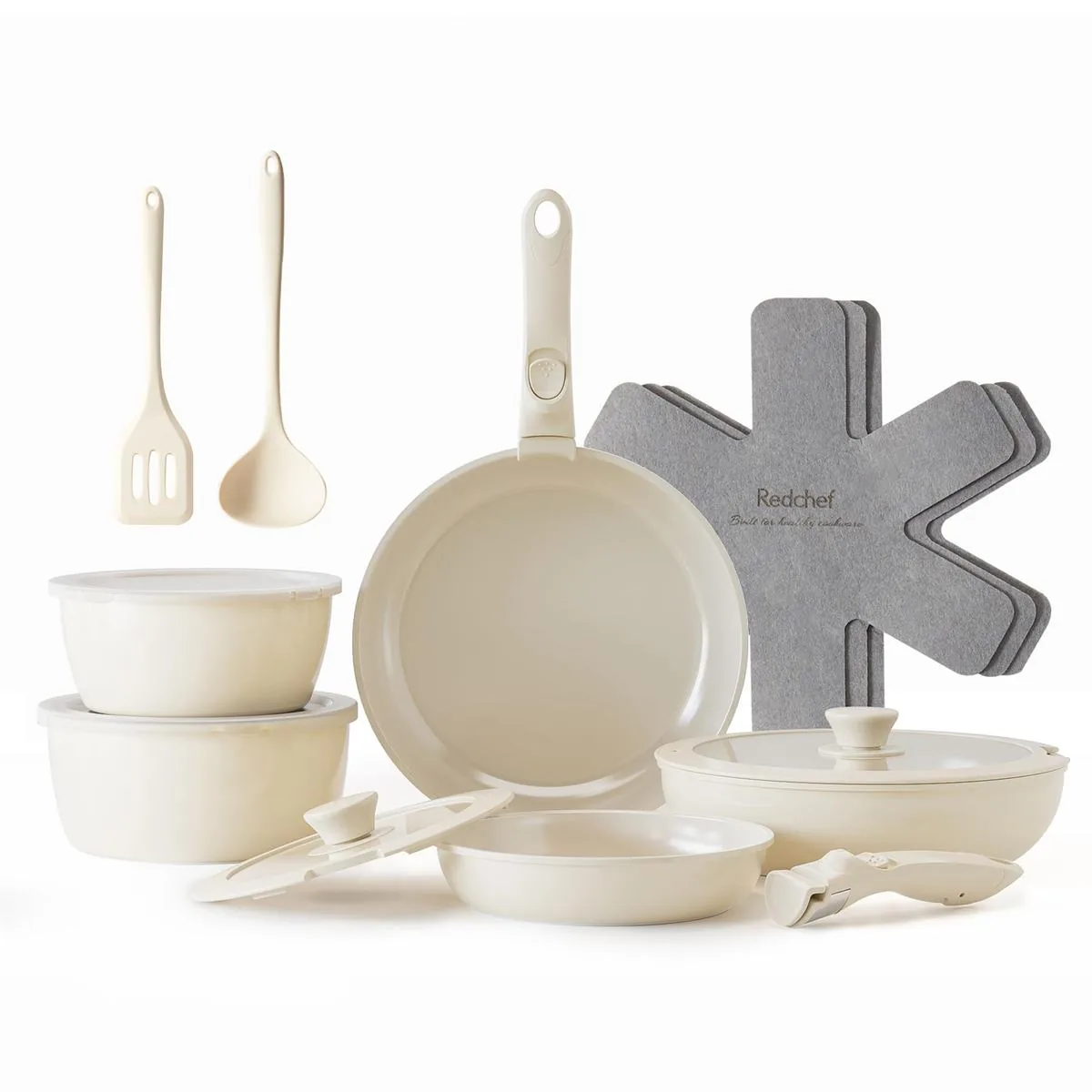
Currently unavailable
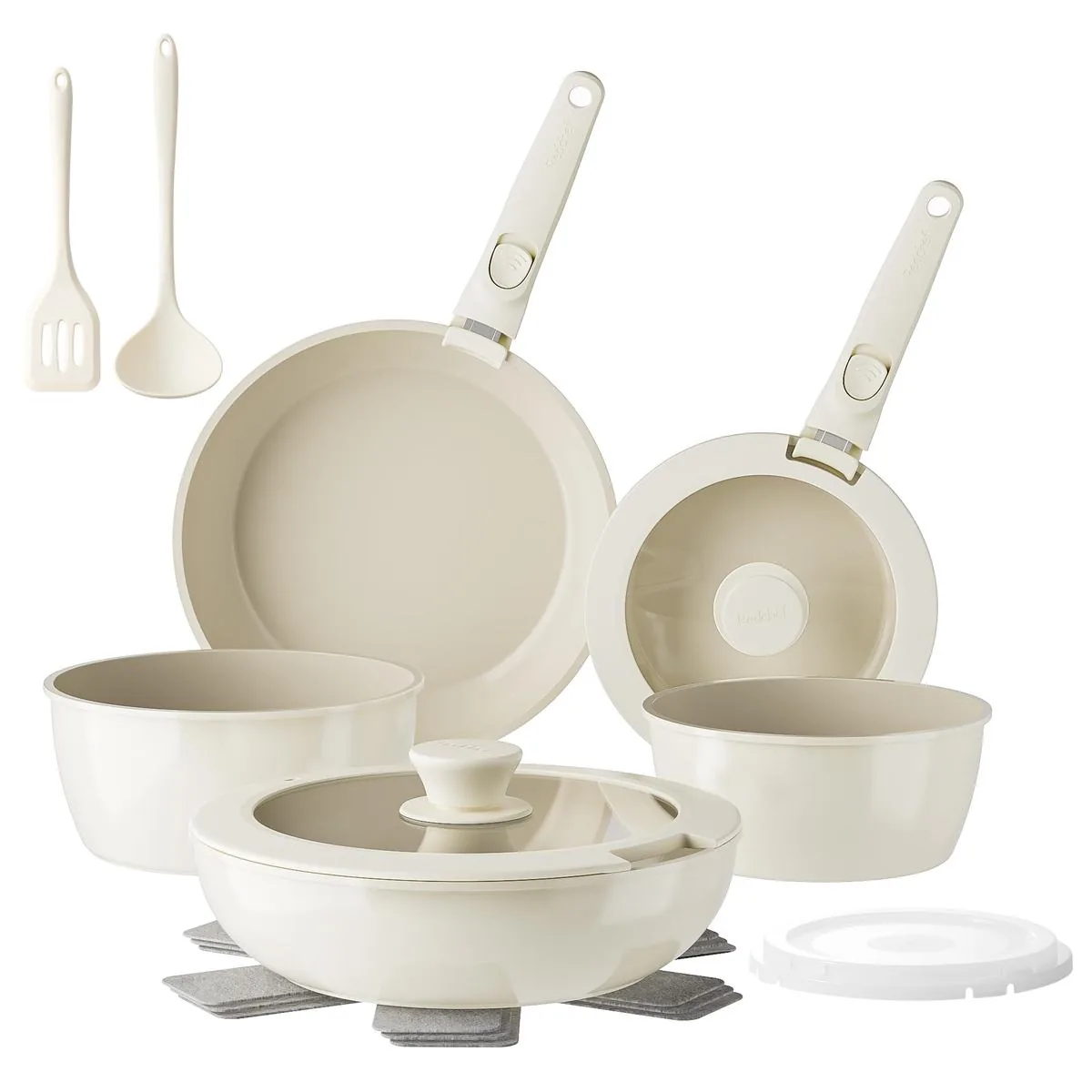
Redchef 16-piece set
This set was the reference behind our piece-count example. It is out of stock on Amazon as of November 2026, so the button below goes to the closest in-stock set in the same range.
See the 5-piece setAffiliate disclosure: We may earn a commission if you purchase through these links, at no additional cost to you.
Frequently asked questions
How long does ceramic nonstick coating last with daily use?
Owner reports put daily-use life at about two years for the pan that gets the most cooking. A reviewer using ceramic pans across rental properties described her first set losing non-stick behavior after roughly two years of daily use, while pans from the same order that were used less often still worked. Treat two years as the planning number for a pan you cook in every day at moderate heat, longer for one used twice a week, and much shorter for a pan that is seared at high heat most days.
Why does ceramic nonstick stop working instead of wearing like metal?
The ceramic is a thin mineral layer sprayed onto an aluminum body and cured, not a metal surface that can be polished back. Once the release layer is worn through or sealed by burnt-on residue, food contacts the layer beneath it and sticks. You cannot re-season it the way you can cast iron, and there is no repair that restores the original surface.
Does high heat shorten the life of ceramic coating?
Yes. Ceramic coatings are rated for high oven temperatures, and one family of listings states 842 degrees Fahrenheit, but that rating describes the pan surviving, not the coating staying intact. Repeated dry preheating and empty-pan heating cycles are what owners describe as the point where release starts to fail, so medium heat with a little oil is the habit that adds years.
Can I use metal utensils on ceramic nonstick?
Listings mention metal-utensil tolerance, and owners who read the coating as what it is use wood or silicone anyway. A ceramic layer is thin and sits on top of metal, so a hardened edge is a scratch risk every time it contacts the surface. Switching to wood or silicone costs almost nothing and is the single easiest way to extend coating life.
Is a dishwasher safe for ceramic nonstick?
The listings say dishwasher safe, and the same listings recommend hand washing to extend the coating's life. Detergent and a hot drying cycle work on the layer that provides release, and pans knocked together in a rack are the stacking problem in mechanical form. Hand washing with a soft sponge and no abrasive pad is the conservative routine.
When should I replace ceramic cookware instead of cleaning it?
Replace when an egg sticks in the middle of the pan after a normal preheat and oil, when the interior shows a color change across the cooking area rather than a few stains, or when the rim has chipped enough that bare metal is visible. Staining alone is cosmetic. Loss of release across the whole surface is the end of the coating's useful life.
Sources
- Retail listing — 5-piece ceramic set, coating description and care note, checked November 11, 2026
- Retail listing — 16-piece set, rating count, checked November 11, 2026; the set is currently unavailable on Amazon
- Manufacturer listing pages for three other ceramic lines: triple-layer coating claim, PFAS/PTFE/PFOA-free statement, 842 degrees Fahrenheit oven rating, dishwasher guidance, item weights, read November 11, 2026
- Owner reviews quoted: the two-year daily-use report from a rental-property owner, the stacking-chip warning, and the wood-utensils-only comment, read November 11, 2026
How this page was researched
This is a research-based guide, not a hands-on test. We have not run a controlled lifespan trial on these pans. Coating construction, oven ratings and care guidance come from the manufacturer's published listings; lifespan figures are summarized from owner reviews and framed as planning estimates rather than measurements. Prices and availability change without notice — confirm on the listing before buying.
Keep reading