Small Appliances · Best of
Best Espresso Machine Under $200
Nearly every machine in this band advertises 20 bar. That figure is pump headroom, not extraction pressure. What actually separates these machines is the group head, how the steam switch behaves, and what owners report months later — so that is what this page ranks on.
Affiliate disclosure: Some links on this page are affiliate links. If you buy through them, we may earn a commission at no extra cost to you.
How this page was made: our picks are based on manufacturer-published specifications (product pages, manuals and spec sheets, linked in Sources at the bottom) and aggregated owner reviews on the retail listings. We have not tested these machines hands-on, and we do not publish invented test scores or lab results. Where a maker does not publish a specification, we say so rather than estimate it. See how we research.
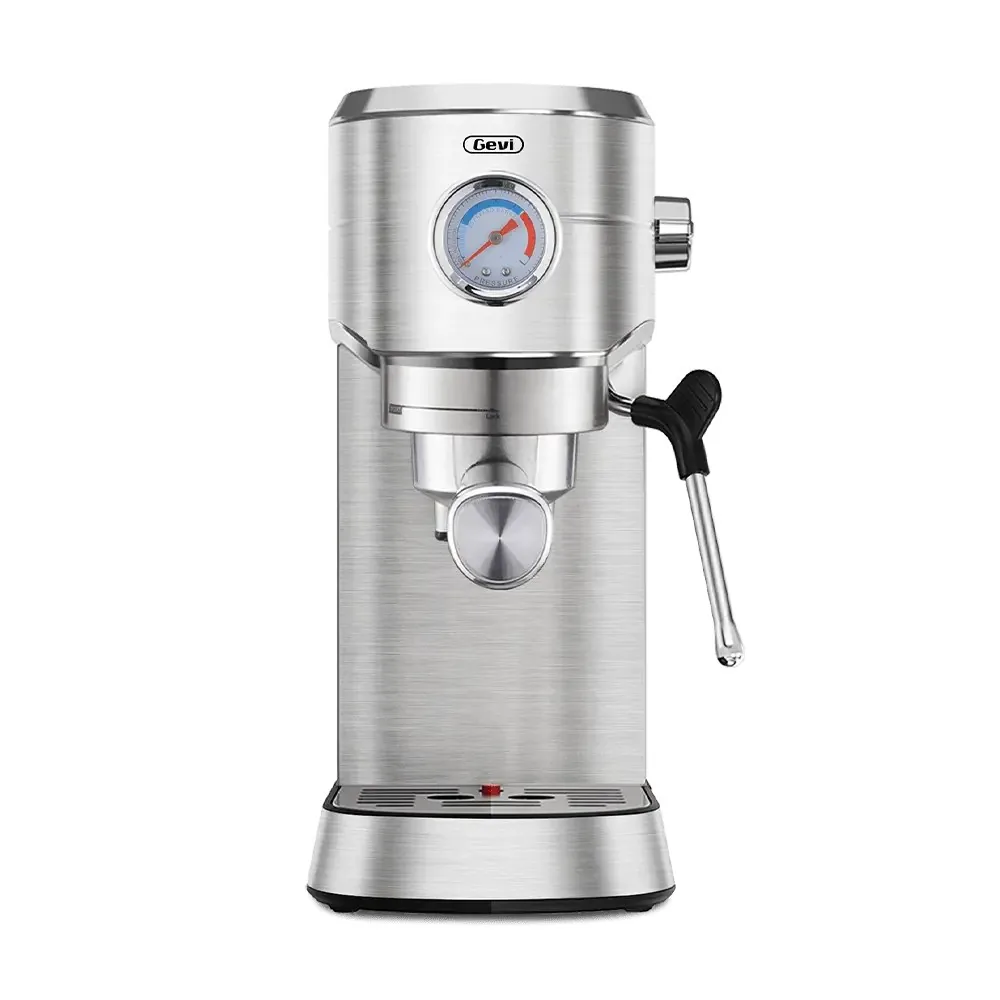
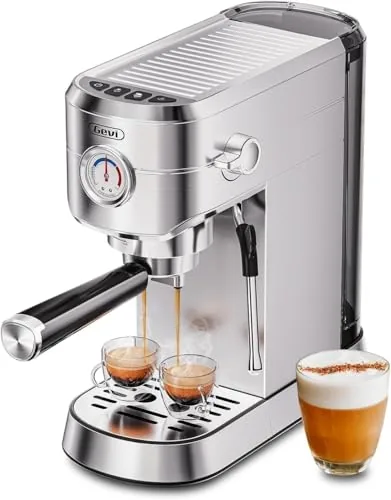
Manufacturer product image of the Gevi ECMG0, the best-overall pick above. This site has not tested it hands-on. — Source: gevi.com
Under $200 you are not choosing between a great machine and a bad one. You are choosing which compromises you can live with: one boiler instead of two, a pressurised basket instead of a precision one, and usually a manual steam wand instead of an automatic one. The three machines below are the ones whose published specs and owner reports hold up best in that band — plus one that costs a little more and solves the grinder problem.
Quick picks
- Best overall under $200: the Gevi 20 Bar Compact — a 51 mm group head, PID temperature control and a working pressure gauge in an 8.8 lb body. It is the least compromised spec sheet in the band.
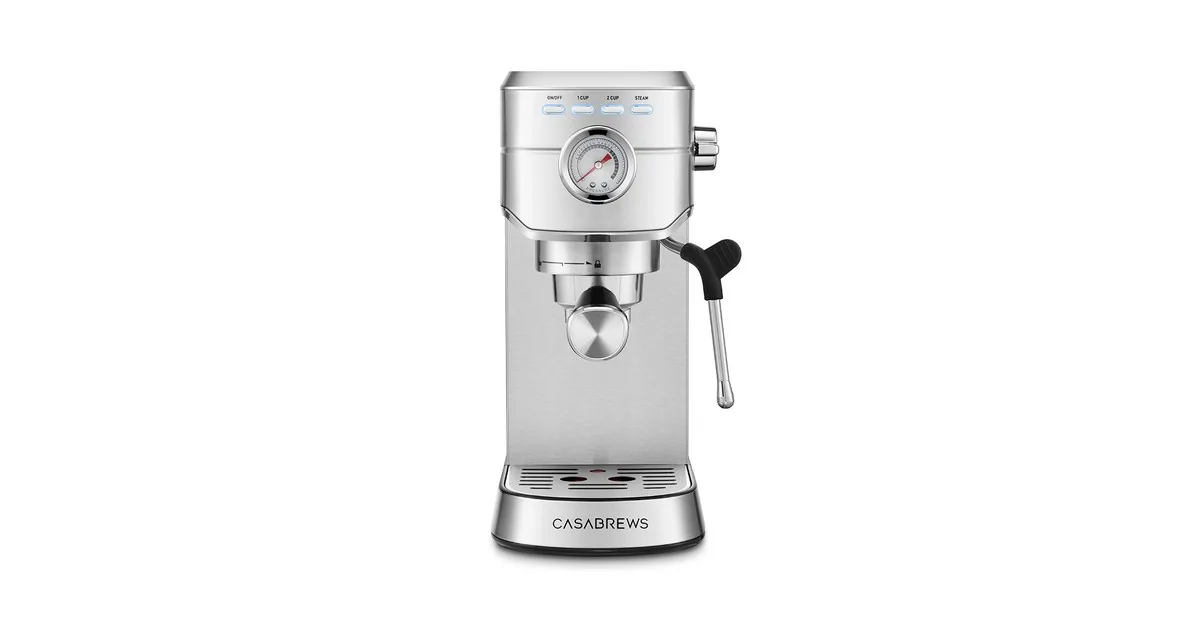
- Best for milk drinks: the Casabrews CM5418 — same 51 mm group and 34 oz tank, but with low-pressure pre-infusion and a steam switch that reaches readiness in about 20 seconds. It also has the deepest owner track record of the three.
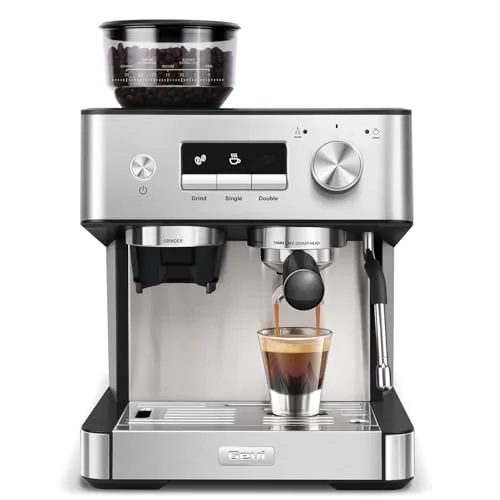
- Worth stretching for: the Gevi 20 Bar with built-in conical grinder — one footprint, fresh-ground coffee, no separate grinder to buy. It sits just over $200.
- The number to ignore: the bar rating. Extraction happens at about 9 bar; a 20-bar label describes pump headroom, not what your coffee sees.
Prices change daily — check the current price on the listing.
Check price: Gevi 20 Bar CompactOpens the retailer's product page. Commission may be earned.
Spec comparison
Manufacturer-published specifications, checked November 2026. Fields marked “not stated” are not published by the maker on the listing we checked — we do not fill those in from guesswork.
| Model | Grinder | Milk | Temp control | Group head | Tank | Weight |
|---|---|---|---|---|---|---|
| Gevi 20 Bar Compact | No | Manual steam wand | PID + NTC sensor | 51 mm | 34 oz (1 L) | 8.8 lb |
| Casabrews CM5418 | No | Manual steam wand | PID + low-pressure pre-infusion | 51 mm | 34 oz | Not stated |
| Gevi 20 Bar with conical grinder | Yes, built-in conical burr | Manual steam wand | Not stated | Not stated | Not stated | Not stated |
Two things in that table are worth more than any badge on the box. Group head size decides whether you can buy baskets, tampers and bottomless portafilters later: 51 mm is common and cheap to support, proprietary sizes lock you out. Temperature control decides whether the second shot tastes like the first — a PID holds the boiler steady, a thermostat swings.
First, ignore the bar number
Espresso is extracted at roughly 9 bar at the group head. When a manufacturer prints 20 bar, it is describing how hard the pump can push, not the pressure the puck experiences. Every machine on this page claims 20 bar, and none of them extracts at 20 bar. A larger number is not a better machine; it is a bigger number.
What you want instead is feedback: a gauge you can watch during a shot. Two of the three picks have one. It is the cheapest way to learn whether your grind, dose or tamp is the thing that changed, instead of guessing.
The picks in detail
1. Best overall under $200: Gevi 20 Bar Compact
The compact Gevi is the least compromised spec sheet in the band. Gevi publishes a 51 mm group head, PID with an NTC sensor, 1350 W on 120 V, a 34 oz (1 L) tank and an 8.8 lb body measuring 12.3 × 5.5 × 12 in. That 5.5 in width is the reason it fits under a cabinet where a 12 in machine does not. It is stainless steel rather than plastic, and it has a pressure gauge on the front panel.
What owners report is consistent with the spec sheet: it heats quickly, the steam wand does microfoam without an automatic frother, and the small drip tray is the recurring complaint. The listing carries a 4.3 / 5 average across 3,814 ratings, which is the kind of volume that makes the low-star reviews informative rather than noise.
Pros
- 51 mm group head — accessories are cheap and available
- PID temperature control in a sub-$200 machine
- Working pressure gauge, so you can dial in a shot
- 5.5 in wide, 8.8 lb — genuinely compact
- Stainless steel body
Cons
- Single boiler: steam, then wait before the next shot
- Manual steam wand — no automatic milk texturing
- Small drip tray and 1 L tank mean frequent refills
- No grinder included
Best for: someone who drinks one or two espressos or milk drinks a day, wants a narrow machine, and would rather learn to steam milk than have it done for them.
Skip it if: you want a bigger tank and a longer track record — that is the next pick.
Check price on Amazon · Manufacturer specs
2. Best for milk drinks: Casabrews CM5418
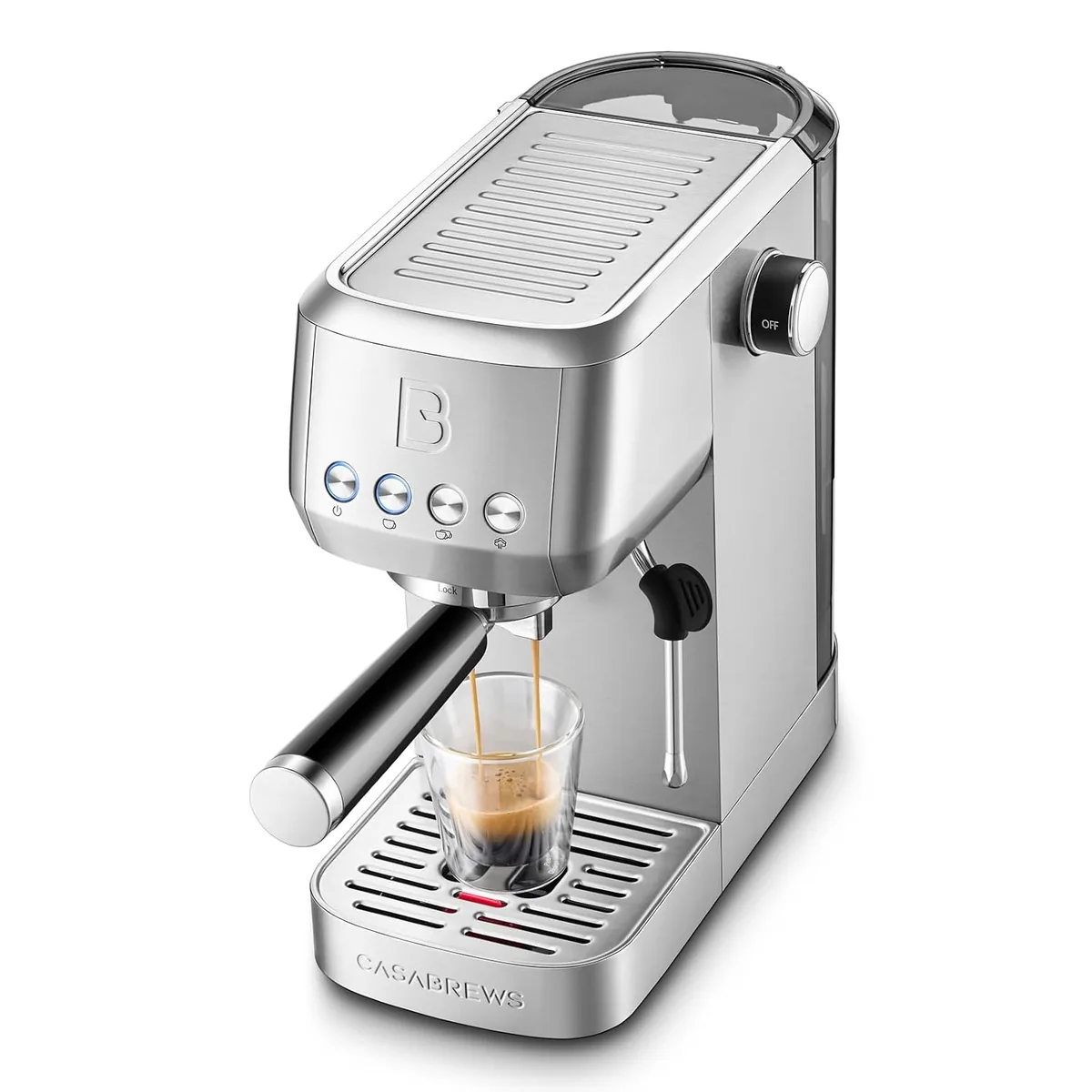
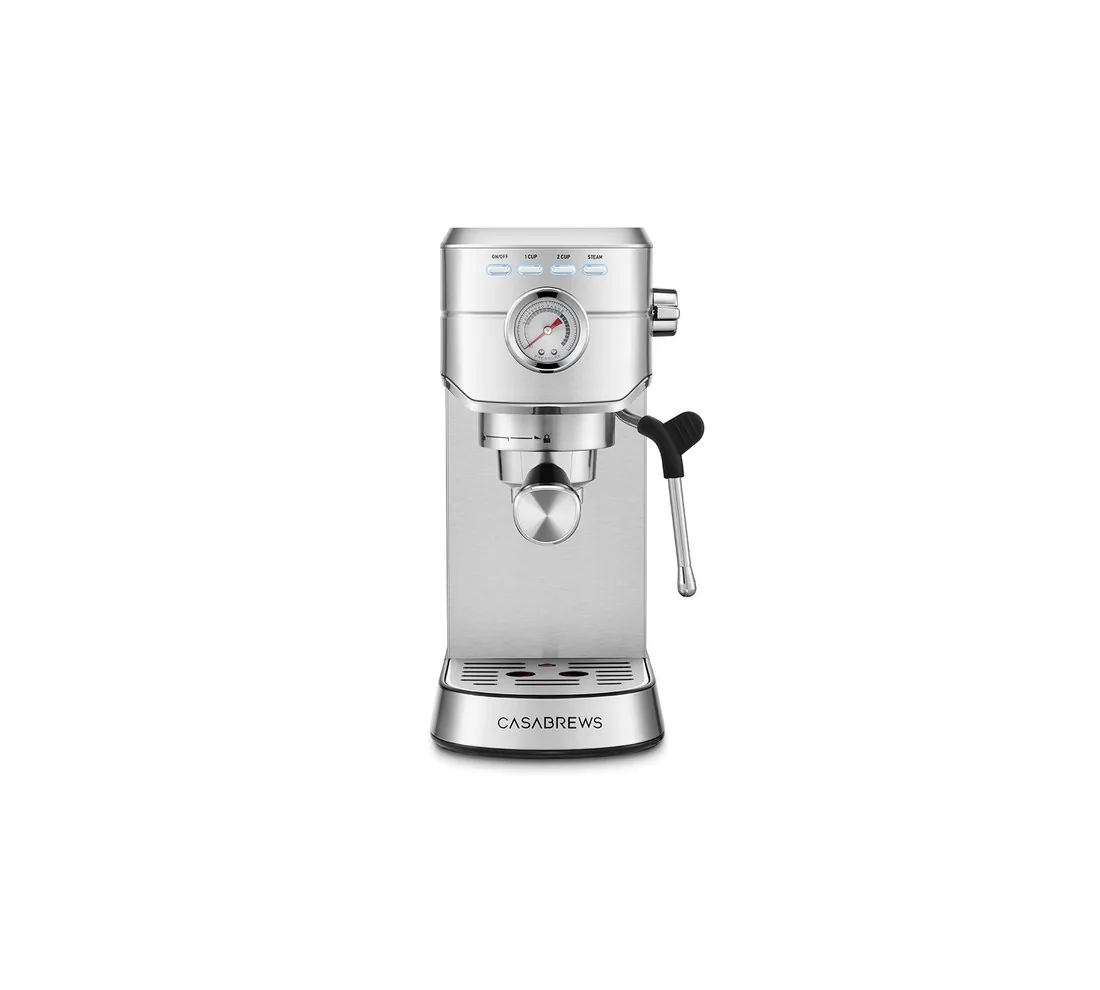
The CM5418 is the pick with the deepest owner base: 4.3 / 5 across 8,274 ratings, more than twice the volume of either Gevi. Casabrews publishes a single boiler with a 20-bar rated pump, PID temperature control, low-pressure pre-infusion before extraction, a 51 mm portafilter with two double-wall baskets, and a removable 34 oz tank. The body is brushed stainless at 5.9 × 11.97 × 12.28 in.
The practical difference from the Gevi is the steam side: the brand lists roughly 50 seconds to brew readiness and about 20 seconds to steam readiness, which is fast for a single boiler. Pre-infusion is the other one — it wets the puck gently before full pressure, which forgives an uneven tamp while you are learning. Our full Casabrews CM5418 review covers baskets, descaling and what the one-star reviews actually say.
Pros
- Largest owner track record on this page (8,274 ratings)
- Fast steam switch for a single boiler (~20 s listed)
- Low-pressure pre-infusion helps beginners
- Working pressure gauge
- Two baskets and a tamper in the box
Cons
- Aluminum portafilter rather than steel
- Single boiler — brew and steam never overlap
- Deeper footprint than the Gevi (12.28 in)
Best for: latte and cappuccino drinkers who make one or two drinks at a time and want the machine with the most owner evidence behind it.
Skip it if: counter depth is tight, or you want a built-in grinder — see pick 3.
Check price on Amazon · Manufacturer specs
3. Worth stretching for: Gevi 20 Bar with built-in conical grinder
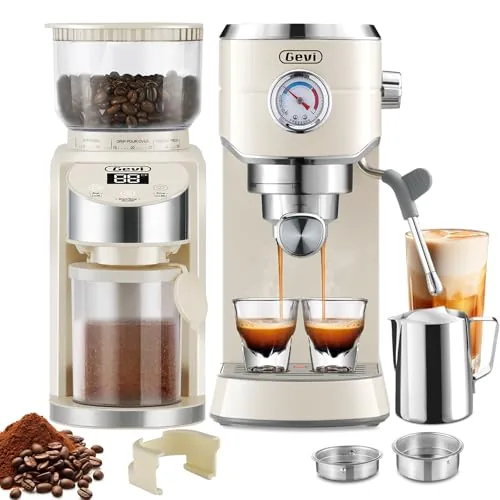
This is the one pick that solves the problem the other two leave you with. It carries a 20-bar pump and a built-in conical burr grinder with anti-static treatment, so whole beans go in and espresso comes out of one footprint — no separate grinder on the counter, no second purchase.
The honest caveat: Gevi does not publish tank size, group head diameter or weight for this listing, which is why three cells in the comparison table say “not stated.” It has 4.3 / 5 across 1,908 ratings — a real owner base, but roughly half of the compact model's. It also sits just over $200, so it is here as a deliberate exception rather than a fourth sub-$200 option.
Pros
- Grinder built in — one machine, one footprint
- Fresh-ground coffee without a second purchase
- 20-bar pump and stainless body
- No grinder-retention mess on the counter
Cons
- Costs more than $200
- Tank, group head and weight not published
- Smaller owner base than the compact model
- A built-in grinder is harder to upgrade later
Best for: anyone starting from zero who would otherwise spend $80–100 on a separate grinder and would rather have one machine to clean and descale.
Check price on Amazon · Manufacturer specs
Recommended products
All three picks at a glance
Best overall under $200
Gevi 20 Bar Compact Espresso Machine
51 mm group head, PID control, working pressure gauge, 34 oz tank, 8.8 lb. Stainless body, 5.5 in wide.
Check current priceBest for milk drinks
Casabrews CM5418 Espresso Machine
PID control, low-pressure pre-infusion, 51 mm portafilter, 34 oz tank. Steam ready in about 20 seconds.
Check current priceWorth stretching for
Gevi 20 Bar with Built-in Conical Grinder
20-bar pump plus a conical burr grinder in one body. One footprint, fresh-ground coffee, no second machine.
Check current priceWe only list machines we can point you to a live listing for. We do not print prices because they change daily — the retailer link shows the current one.
What $200 actually buys in 2026
It helps to think in tiers rather than one price point. Most machines in this band fall into one of three, and knowing which tier a product sits in tells you more than its star rating.
| Tier | Typical build | Who it suits |
|---|---|---|
| Under $90 | Plastic body, pressurised basket only, usually no gauge | Occasional use; shortest service life |
| $90–160 | Metal body, gauge common, 51 mm standard group head, PID on newer models | Daily one- or two-drink households — the sweet spot |
| $160–210 | Better pump, pre-infusion, sometimes a built-in grinder | Buying once and skipping the separate grinder |
Three mistakes buyers make at this price
1. Buying on the bar rating
Covered above and worth repeating: the bar number is pump headroom, not extraction. A gauge tells you more than a badge ever will.
2. Forgetting the grinder
On the stock pressurised baskets a mediocre grinder is survivable. The moment you switch to a non-pressurised basket, grind consistency becomes the limiting factor in taste — and that is a separate $80–100 people forget to budget. Pick 3 exists because of this.
3. Ignoring the portafilter size
A proprietary group head locks you out of inexpensive upgrades later. 51 mm and 54 mm have the widest accessory support; treat anything unusual as a warning sign.
Who should buy what
| Straight espresso, one or two a day, narrow counter | Gevi 20 Bar Compact — the narrowest, lightest pick with a gauge and PID. |
|---|---|
| Latte or cappuccino most mornings | Casabrews CM5418 — fast steam switch and the largest owner base. |
| Starting from nothing, no grinder yet | Gevi with built-in grinder — one purchase, one footprint, just over $200. |
| Several milk drinks back to back | None of these. A single boiler will make you wait between drinks; look above this band. |
Frequently asked questions
Is a 20-bar machine better than a 15-bar one?
No. Espresso extracts at roughly 9 bar at the group head, so anything above that is pump headroom rather than extraction pressure. Both machines on this page claim 20 bar and neither extracts at 20 bar.
Do I need a grinder too?
Not at first, if you stay on the pressurised baskets the machine ships with. Once you move to a non-pressurised basket, a burr grinder becomes the biggest factor in taste — budget $80–100, or choose the pick with the grinder built in.
Can these machines brew and steam at the same time?
No. All three are single-boiler machines. After steaming, the boiler is too hot to brew, so you wait before the next shot. That is the trade-off this price band makes.
How long do these machines last?
It comes down to the pump, the seals and descaling. Scale build-up and pump or valve fatigue are the most commonly reported mid-life failures in this band. Consistent descaling with the water hardness where you live is the single biggest thing you control.
Did you test these machines hands-on?
No. Picks are based on published specs plus aggregated owner reviews. See how we research.
Sources
Specifications were checked against the pages below in November 2026. Makers revise specs and sell regional variants, so confirm the exact model number before you buy. We do not list prices because they change daily; use the retailer link to see the current one.
- Gevi: Compact Espresso Machine with Milk Frother, 20 Bar — product page
- Gevi: coffee machines range and spec comparison
- Gevi 20 Bar Espresso Machine with Conical Burr Grinder — retail listing
- Casabrews CM5418 — retail listing and owner reviews
How this guide was researched
This is a research-based guide, not a hands-on test. We did not run instrumented lab measurements on these machines. The comparison is built from published manufacturer specifications, retailer listing data, the rating distribution and written review text on those listings, all checked on the date shown. Where a specification is not disclosed by the manufacturer, we say so rather than infer it. Prices and availability change without notice — confirm on the listing before buying.
Keep reading
More espresso machine guides