Small Appliances
Casabrews CM5418 Review: What Amazon Buyers Actually Report
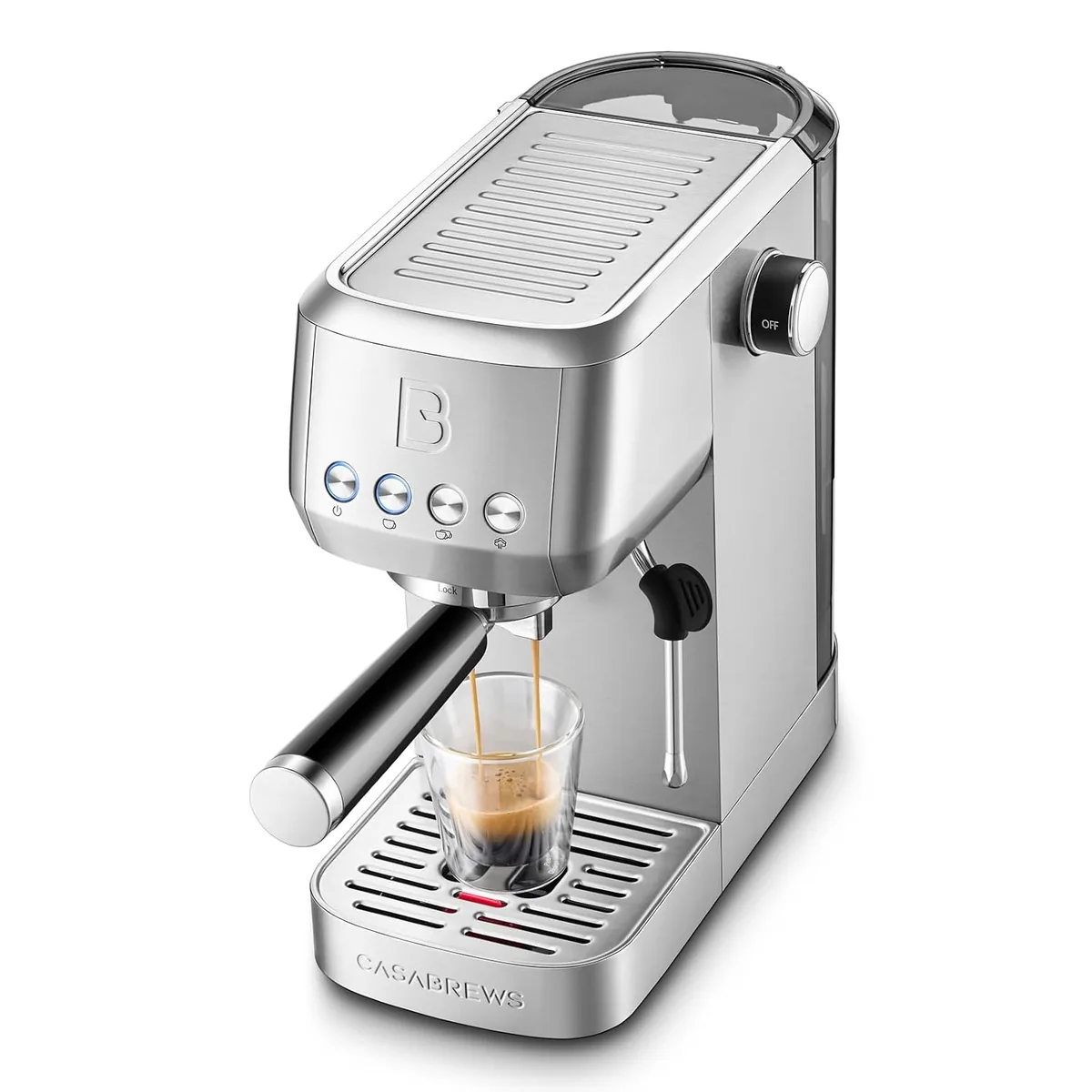
A 20-bar single-boiler machine with a pressure gauge, a 51mm portafilter, and a 34 oz tank. The specs are not the interesting part — the 10% of buyers who gave it one star are.
Product reviewed: Casabrews CM5418BC-UL · 20 bar · 51 mm
Affiliate disclosure: Some links on this page are affiliate links. If you buy through them, we may earn a commission at no extra cost to you.
How this review was made: we have not bought or hands-tested this machine. It is built from the manufacturer's published specification and instructions, the Amazon listing and its owner reviews. See how this review was researched.
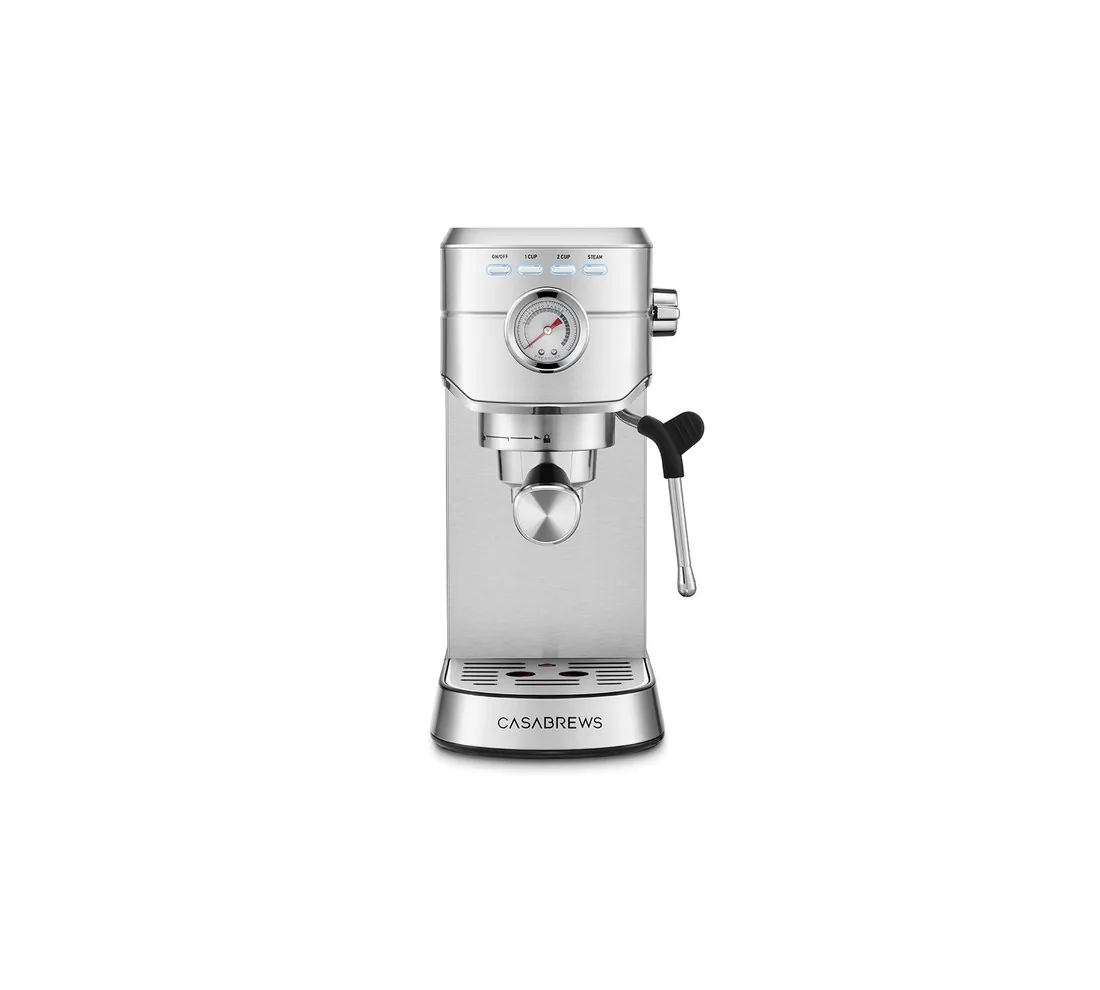
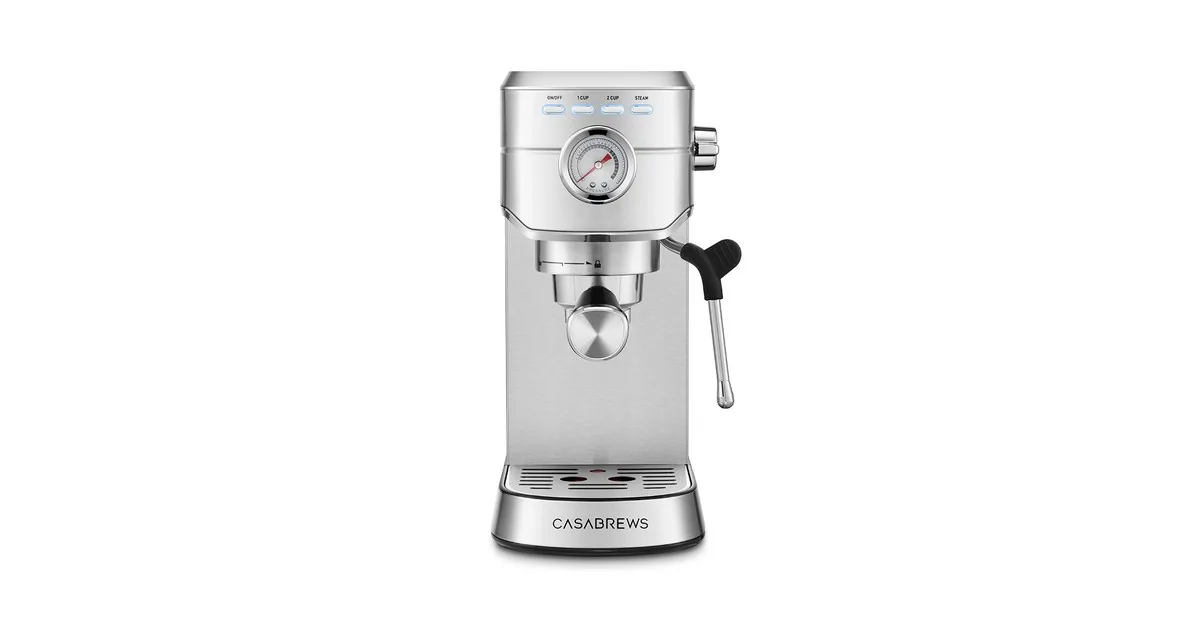
The Casabrews CM5418 is the machine you find when you search "espresso machine" and sort by price. It looks like a machine that should cost several times more, sits in the entry-level band, and has 8,274 ratings averaging 4.3 out of five on the listing (November 7, 2026). Those three facts together are why it sells. The question this review answers is narrower: what does the other 10% — the one-star reviews — actually say, and does it matter for the kind of coffee you want to make?
Quick verdict
- Buy it if: you want to pull real espresso shots from ground coffee, you accept a hands-on single-boiler workflow, and your budget is in the entry-level band.
- Skip it if: you mainly drink lattes and want to steam and brew back to back, or you want a one-button machine with no learning curve.
- The number that matters: 4.3 stars, but 10% of 8,274 ratings are one star — roughly 826 people. Reliability is where the complaints concentrate.
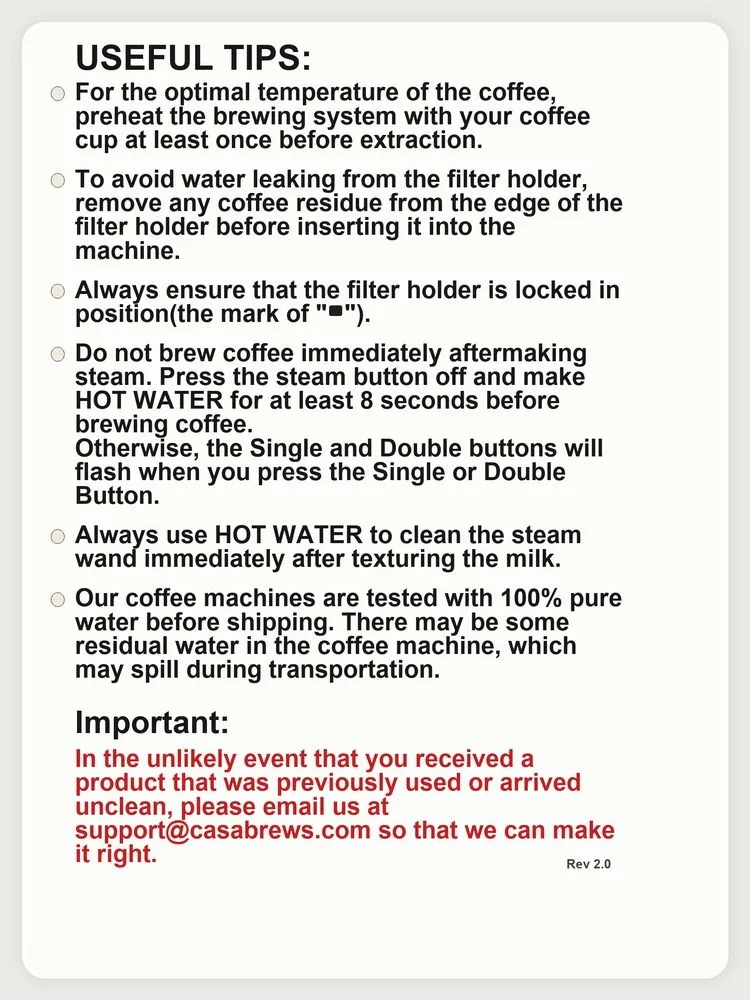
- The catch: after steaming milk, the boiler is too hot to brew. You have to cool it down first, or the cup lights flash and the machine refuses to run.
Price and availability change · check the current figure on Amazon
Check price at AmazonOpens the retailer's product page.
Pros and cons
Pros
- Brushed stainless steel body, where most machines in this price band are plastic
- A real pressure gauge, so you can see whether grind, dose or tamp is the problem
- PID temperature control and low-pressure pre-infusion, both listed by the brand, though we did not test either
- Two double-wall baskets that forgive an imperfect grind on day one
- Full kit in the box: portafilter, both baskets, tamper with spoon, manual
- Running cost a fraction of a café latte — roughly a sixth of the counter price
Cons
- Single boiler: you must cool it down after steaming before the next shot
- 51 mm portafilter means a narrower accessory market than 58 mm machines
- The included plastic tamper is a placeholder; most owners replace it early
- About 10% of 8,274 ratings are one star, with reliability the main complaint
- One-year warranty, and seller support is uneven in the worst reviews
How we reviewed it: this is a research-based review, not a hands-on test. We did not run timed or instrumented lab tests, and we have not tested long-term durability — one unit could not show how often these machines fail. To build this guide we read the full published specification, the rating distribution, the review themes Amazon aggregates for this listing, the written text of verified-purchase reviews (paraphrased, with dates), the manufacturer's own troubleshooting notes, and about two and a half months of price history from Keepa.
At a glance
| Brand / model | Casabrews / CM5418BC-UL |
|---|---|
| ASIN | B09X3WGJ3R |
| Price | See the current listing on Amazon |
| Type | Semi-automatic, single boiler, ground coffee |
| Pump / power | 20 bar rated pump, 1350 W, 120 V |
| Temperature control | PID temperature control (brand's listed feature) |
| Pre-infusion | Low-pressure pre-infusion before extraction |
| Warm-up (listed) | ~50 s brew, ~20 s steam |
| Portafilter / baskets | 51 mm aluminum portafilter, two double-wall (pressurised) baskets — one-cup and two-cup |
| Water tank | 34 oz, removable |
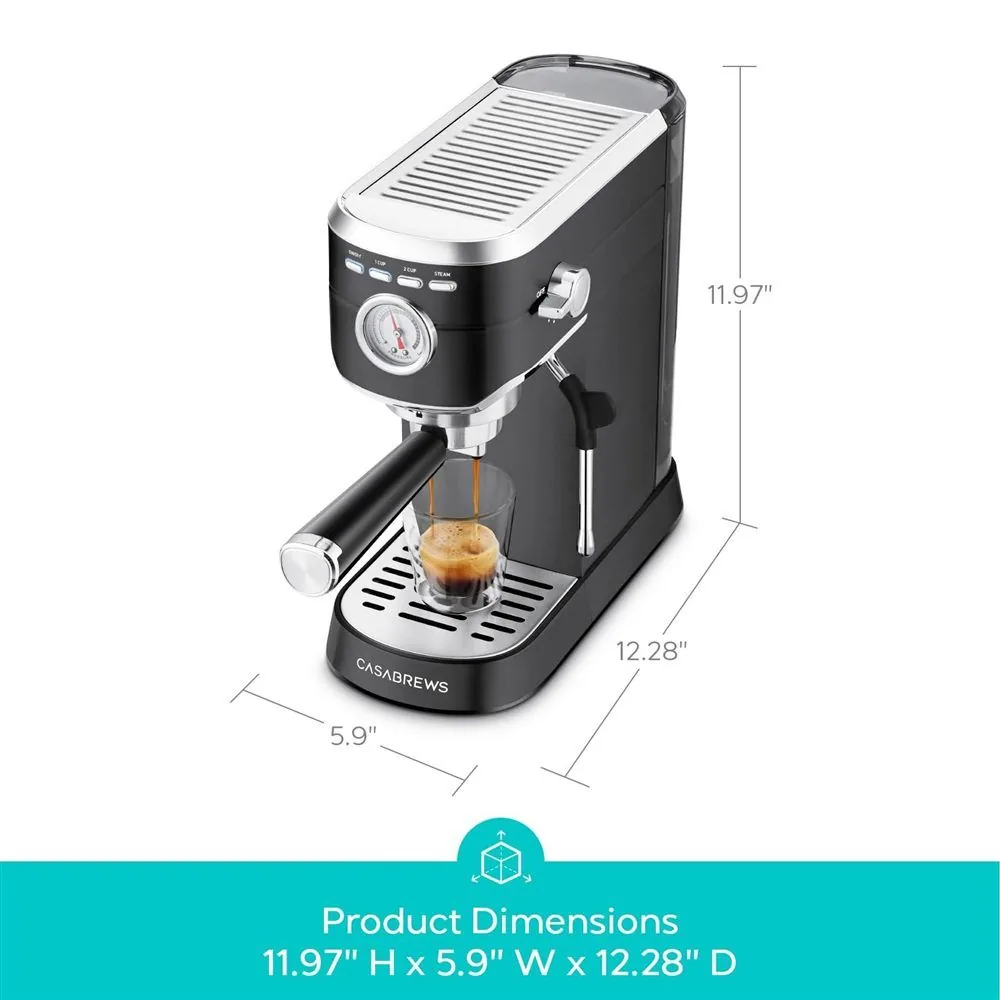
| Dimensions | 5.9 × 11.97 × 12.28 in |
| Body | Brushed stainless steel exterior |
| Finishes | Silver, Black, IvoryBloom, Beige, Pastel Green, Baby Blue, Sapphire Blue, Blue Willow |
| In the box | Machine, tank, two baskets, portafilter, tamper with spoon, coffee recipe book, manual |
| Warranty | 1 year |
| Rating | 4.3 / 5 from 8,274 ratings |
| Sales rank | #5,058 in Home & Kitchen; #2 in Semi-Automatic Espresso Machines |
| Fulfilment | Ships from Amazon, sold by Casabrews |
What is in the box
Per the listing, the CM5418 ships with the machine, a 34 oz water tank, the portafilter, two double-wall baskets (one-cup and two-cup), a plastic tamper with a spoon on the other end, a quick-start card and an instruction manual. The listing also offers black, ivory, beige, pastel green and several blue finishes besides silver.
We have not handled this machine, so we cannot speak to packaging quality or condition on arrival; owner reviews are the better guide there. The paperwork is split in two: a one-sheet quick-start card for the first shot, and a fuller manual for troubleshooting — which is the reason the FAQ below exists.
CM5418 vs the two machines buyers cross-shop
Three 20-bar entry machines, the same price band, and the same structural compromise: one boiler, so brewing and steaming cannot overlap. What separates them is the detail you live with every day — the group size, the tank and the footprint.
| Spec | CM5418 | Casabrews 3700 Essential | Gevi 20 Bar Compact |
|---|---|---|---|
| Pump | 20 bar | 20-bar rated Italian pump | 20 bar rated; 9 bar described as the optimal extraction pressure |
| Portafilter | 51 mm aluminum, two double-wall baskets | Not stated on the listing | 51 mm |
| Power | 1350 W, 120 V | Not stated on the listing | 1350 W, 120 V / 60 Hz |
| Water tank | 34 oz, removable | 43.9 fl oz (about 1.3 L), removable | 34 oz (1 L) |
| Footprint | 5.9 in W × 12.28 in D × 11.97 in H | 6.5 in W × 13 in D × 12.1 in H | 5.5 in W × 12.3 in D × 12 in H |
| Warm-up, as listed | ~50 s to brew, ~20 s to steam | Not stated on the listing | Not stated on the listing |
| Steam workflow | Single boiler; cool-down between steaming and the next shot | Single boiler | Single boiler |
| The detail that actually changes your mornings | The pressure gauge is a training tool: it tells you when the grind is off | 43.9 fl oz means fewer refills mid-session | Narrowest of the three, easiest to leave on a small counter |
None of the three is "better" in the abstract. The 51 mm group is the constraint to accept first: bottomless baskets, tampers and precision baskets exist for 51 mm, but the shelf is far narrower than the 58 mm ecosystem. If you already own 58 mm accessories, none of these machines will use them.
What the money buys
At this price you are buying three things that are genuinely hard to get cheaply: a metal body, a pressure gauge, and a 51 mm portafilter. The gauge is the most underrated of the three. Most sub-$200 machines give you a button and no feedback, so when the shot runs fast or chokes you have no idea why. Watching the needle tells you whether the problem is grind, dose, or tamp.
The 20 bar figure is the least useful number on the page. Espresso brews at roughly 9 bar; the 20 bar rating is the pump's maximum, not the pressure in the basket. It is not a lie, but it is not a reason to buy, and most brands at this price print a big number on the box.
The 51 mm portafilter is the real compromise. Commercial machines use 58 mm, which means more coffee in the basket and more third-party accessories. At 51 mm you are limited to what Casabrews sells plus a thin aftermarket. For a first machine that is acceptable; if you plan to upgrade in a year, it is money you will not recover.
Check the CM5418 price on Amazon
The 7:20 a.m. timeline
A specification table cannot show you what a single boiler feels like on a Tuesday morning. So here is one latte, in sequence, using the manufacturer's listed warm-up times, with the waits written down where they actually happen.
| Clock | What you do | What you wait for |
|---|---|---|
| 7:20 | Switch on, weigh and grind, dose, tamp | ~50 s brew warm-up |
| 7:21 | Pull the shot — 25–30 s of extraction | — |
| 7:22 | Switch to steam, purge the wand | ~20 s to steam readiness |
| 7:23 | Froth the milk, pour | — |
| 7:24 | First latte done. | — |
| 7:24–7:25 | Cool the boiler with the hot-water function — not the brew button | up to ~20 s |
| 7:25 | Second shot can start | — |
Everything up to "first latte done" is fast enough that it does not feel like a compromise. The line that matters is the one after it. Casabrews's own notes say not to brew immediately after frothing milk: temperature and pressure are still too high, the one-cup and two-cup lights flash into overheat protection, and the listed fix is to run the hot water function for around 20 seconds to bring the temperature back down.
That cool-down, repeated for every milk drink in a back-to-back morning, is the actual difference between this machine and one that costs two or three times as much. Every other wait in the table is measured in seconds once. This one is measured in your patience, every day.
Black-coffee drinkers never meet this section. If your household makes two lattes before leaving the house, this is the paragraph that should decide the purchase.
What 8,274 ratings say
The distribution is not the smooth curve of a universally liked product. It is 71% five-star with a visible spike at the bottom:
| Stars | Share | Rough count |
|---|---|---|
| 5 | 71% | ~5,874 |
| 4 | 10% | ~826 |
| 3 | 5% | ~414 |
| 2 | 4% | ~331 |
| 1 | 10% | ~826 |
Amazon's own review themes give the shape of it. The listing's review tags, read on November 11, 2026, rank performance first at about 1,900 mentions, then reliability at about 1,200, value for money at about 1,000 and espresso quality at about 947. Behind those sit taste (about 354), compact size (about 350), appearance (about 348) and durability (about 341) — which is telling, because durability is the fourth-smallest of the eight tags. The summary Amazon generates from those reviews is blunt: buyers praise the stainless design, the compact footprint, the crema, and how simple it is to use, while reliability receives mixed feedback, with some reporting the machine stopped working entirely, and that some units broke down within four months.
That is the honest headline of this review. A 4.3 average over 8,274 ratings, with a 10% one-star tail, means most people get a working machine and a meaningful minority do not. At this price point that is a known trade-off rather than a defect unique to Casabrews — but you should buy it knowing the warranty is one year and that buying through a retailer with easy returns is part of the decision.
What the one-star reviews actually describe
Sorted by what the reviewer was doing when it went wrong, the low-star complaints fall into three groups rather than one — and only one of those groups is hardware:
| What they describe | How often it comes up | What it usually turns out to be |
|---|---|---|
| No water, or only a few drops | Recurring | Either a failed pump or a grind fine enough to choke the basket. The two look identical to a first-time owner. |
| Both cup lights flashing | Recurring | Overheat protection after steaming. A workflow error, not a defect. |
| No reply from the seller | Recurring in the worst reviews | Support, not hardware. At least one buyer chased the seller twice before fixing it herself. |
That sorting matters, because two of the three are things a buyer can solve. It also explains a review that reads like a contradiction: a buyer writing in July 2026 hit the "only a few drops" problem, contacted the seller twice with no answer, and left one star — then resolved it herself by switching to the single-shot basket and resetting the water amount, and wrote that she would have given five stars but for the silence. The machine worked. The support did not.
The long-run counter-example is just as useful. A verified buyer writing in October 2025, roughly a year into ownership, reported about 350 cappuccinos with no failure except running the tank dry, and one workflow complaint in his own words: for two drinks you have to pull both espressos before steaming the milk. He also replaced the included plastic tamper with a stainless one. Same machine, same limitation, described by somebody who kept using it — which is the most credible version of the story you will find.
Taken together, the reviews land on the same three points: the hardware usually works, the workflow has a fixed order, and the real risk sits in what happens when something goes wrong.
The grinder matters more than the machine
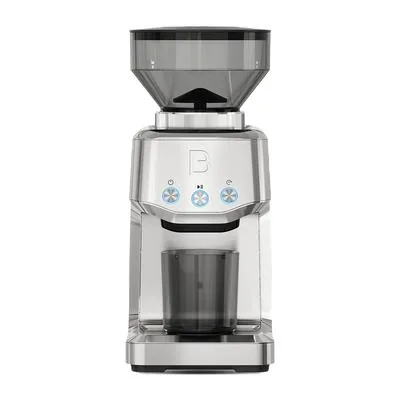
This is the part that decides whether the CM5418 makes good coffee, and it is the part most reviews skip. An entry-level machine with stale pre-ground coffee produces flat, watery shots. The same machine with freshly ground beans from a decent burr grinder produces espresso that most people would struggle to distinguish from a café.
It is worth being precise here, because the stock baskets change the answer. The CM5418 ships with two double-wall (pressurised) baskets, and those are deliberately forgiving: they create back-pressure themselves, so coarse or stale pre-ground still produces a crema-topped shot instead of a gusher. That means a grinder is optional on day one.
The trade-off is a ceiling. Pressurised baskets fake the resistance a proper grind would create, so they also flatten the difference between a good and a mediocre bean. The moment you swap in a non-pressurised basket — which is the first upgrade most owners make — the grind becomes the single variable that decides whether the shot is drinkable. Casabrews's own troubleshooting assumes this: when pressure reads low, it tells you to grind finer, add more coffee, or tamp harder. Two of those three require a grinder.
Three things the listing never mentions
1. The tamper in the box is a placeholder
The kit ships with a plastic tamper with a spoon on the other end. It is adequate for a first shot but poor for a level, repeatable tamp — which is exactly the variable you will be adjusting most often. Owner reviews often mention replacing it early; a stainless 51 mm tamper is the first purchase after the machine, and it is not optional if you want consistent shots.
2. 51 mm means a narrower aftermarket
Home espresso mostly runs on 58 mm, and nearly every accessory — distribution tools, bottomless portafilters, precision baskets — is made for it. At 51 mm you shop from a smaller shelf: the brand's own parts plus a thin third-party selection. It works, but you cannot inherit a friend's accessory collection, and upgrading the basket later is harder than it would be on a 58 mm machine.
3. The order of operations is fixed
Shot first, steam second, cool the boiler before the next shot. Reverse it and the machine protects itself with flashing lights and a wait. That is not a fault, but it is the one rule you have to learn — and it lives in the troubleshooting notes, not the sales copy.
What breaks, and when
We have not tested a unit and owner reviews are anecdotal, so treat this section as a pattern rather than measured data. The "no water" and "no pressure" complaints tend to describe the first weeks of ownership, and wear-related failures are what you would expect from any pump-and-heater machine after a year or more.
| Period | What tends to be reported | What to do about it |
|---|---|---|
| First 30 days | No water, weak flow, or a machine that never reaches pressure | Return it. This window is the cheapest insurance you will ever have on an entry-level purchase. |
| Months 1–12 | Scale in hard-water areas; a clogged steam wand if it is not purged | Purge the wand after every use and descale on the manual's schedule. |
| After 12 months | Pump and seal wear, the occasional heating-element failure | Out of warranty. At this price a repair usually costs more than the machine — budget for replacement, not repair. |
The one-year warranty is the number to hold on to. Anything that fails after month thirteen is your cost, and that belongs in the budget before you buy rather than after.
Two lights flashing, no water, no crema: the diagnostic table
Nine symptoms cover almost every complaint in the low-star reviews. Work down the list in order: the first three rows explain most of the one-star stories, and none of them is a hardware fault.
| What you see | What it usually is | Do this first | Stop and claim the warranty if |
|---|---|---|---|
| Both cup lights flash after you steam milk | Overheat protection. The manufacturer's own note in the listing says the machine must cool before brewing again | Switch off, open the steam valve to release pressure, let it cool 15–20 minutes. Do not press brew while the lights flash | It still flashes when cold, an hour later |
| Pump runs but only a few drops come out | Either the grind is fine enough to choke the basket, or the pump has failed. The two look identical from the outside | Load the double-wall basket with a coarse grind and pull again. Water flows = the grind was the problem | Nothing flows with the pressurised basket either |
| Double shot starts, then cuts off after a few drops | The programd shot volume can drift — one owner fixed exactly this by resetting the single and double volumes | Reset both volumes to the manual's figures, then pull a shot | Volumes reset and it still cuts short |
| Water on the counter under the machine | Tank not seated, valve not seated — or a leaking tank; one owner reported water coming from the bottom of the tank after reassembly | Reseat the tank, dry the area, run one shot and watch | Moisture returns within a day, or it leaks with the tank correctly seated |
| Shot runs in under 15 seconds, pale and thin | Grind too coarse, or dose too low | Go one step finer and add 1–2 g, keeping the tamp level | The finest setting still runs fast in a pressurised basket |
| Shot takes over 40 seconds and drips brown | Grind too fine, or the basket is overfilled | Back off one grind step, level the bed, stop overfilling | It chokes at every setting, including coarse |
| Sour or bitter, and it is not just weak | Under- or over-extraction rather than a fault | Hold the dose constant, aim for 25–30 seconds, change one variable per shot | Consistent with fresh coffee, correct timing and a pressurised basket |
| Steam weak, or dies after about 10 seconds | Single boiler recovering between cycles; sometimes a clogged wand tip | Purge the wand, clean the tip, wait for the steam light before frothing | No steam at all after 20 minutes |
| Nothing happens, or the breaker trips | 1350 W sharing a circuit with something else | Try a dedicated outlet | It trips on a dedicated outlet |
The 30-day exit test: what to record while returning is still free
A 10% one-star share out of 8,274 ratings is roughly 827 owners. Some of those are workflow errors this table can fix; some are genuine failures that show up early. The point of buying through a retailer with an easy return window is that you get to test the machine while the decision is still reversible — not after month thirteen.
| Check | When | Pass looks like | Fail means |
|---|---|---|---|
| First shot, pressurised basket, coarse grind | Day 1 | Water within a few seconds of the pump starting | Return: pump or valve, not the grind |
| Double shot with 16–18 g, level bed | Day 1, 3 and 7 | 25–30 seconds, no early cut-off | A drift of more than 8 seconds points at grind or scale before hardware |
| Two milk drinks back to back | Day 2 | Steam back in about 20 seconds after the purge | Longer recovery is the single-boiler design, not a fault |
| Dry paper under the machine overnight | Day 7 | Still dry | Any moisture: a leak, and a return |
| Steam wand after every use | Every use | No residue inside the tip | Residue means a clog is forming — clean it that day |
| Programmed double volume | Day 14 | Full double every time | Reset the volume; if it persists, use support before the window closes |
Cost per drink
The reason a machine like this pays off is not the sticker price, it is the per-cup cost against a café. Put in relative terms:
The machine itself, spread over three years at two shots a day, adds only a few cents per cup. Beans and milk account for almost all of the rest. The total lands at roughly one-sixth of what the same latte costs at a café counter.
At that ratio the machine pays for itself after roughly 37 lattes — about five weeks at one a day. That math is the strongest argument for buying a low-cost machine at all, and it holds even if the machine only lasts two years instead of three.
One owner who kept a running tally arrived at the same conclusion from the other direction: after about 350 cappuccinos in a year, he tallied what the beans cost per double shot using 14 g of whole beans, and noted that the same 350 drinks at a café would have cost many times what the beans did. His claim that the machine paid for itself in under six months is arithmetic, not a testimonial — and the arithmetic is the reason this category exists.
Should you buy it?
| Your situation | Verdict |
|---|---|
| One drink a day, espresso or Americano, and you want to learn grind and dose | Buy it. The gauge is the cheapest feedback loop in espresso. |
| Two or more milk drinks back to back every morning | Skip it. You will fight the boiler every single day. |
| You already own a burr grinder | Buy it. The grinder decides cup quality; the machine is the cheap half. |
| No grinder, and the machine is your whole budget | Fine to start. The stock pressurised baskets forgive pre-ground coffee. Budget for a burr grinder before you swap to non-pressurised baskets. |
| You want one button, pods, and no learning curve | Skip it. This is a manual workflow wearing a friendly price tag. |
| You need it to last five years | Rethink. One-year warranty, and failures after that are your cost. Plan on a two-to-three-year machine. |
The short version: buy it as a two-to-three-year first machine that will teach you what grind and dose actually do, not as the last espresso machine you will ever own.
Put the price in context: this is an entry-level espresso machine. For a beginner whose whole budget is under $200, it is the option we would point at — less for how it pulls than because the pressure gauge and the 51 mm basket make the learning curve visible instead of guesswork.
Check the current CM5418 price on Amazon
Price and availability change. The listing is the only reliable price — confirm it before ordering.
If this is not the one
Three directions worth considering instead, none of which requires buying a different machine today:
- Move the budget to the grinder. A better burr grinder plus a machine with a pressurised basket will out-brew this machine with supermarket grounds. The grinder is the single biggest quality lever at any price.
- Pay once for a boiler that brews and steams at the same time. If you make two milk drinks every morning, the extra spend buys back minutes per day and removes the cool-down step entirely.
- Skip electric altogether. A manual lever or a stovetop maker needs no pump, no boiler and no descaling, and teaches pressure by hand — slower, but nothing breaks at month thirteen.
Bottom line
The Casabrews CM5418 is an entry-level machine that does entry-level things well: metal body, a working pressure gauge, real espresso, and a running cost low enough to pay for the machine in weeks rather than years. PID control and pre-infusion are on the spec sheet, and we could not verify how they perform without hands-on testing. It does not do what a double-boiler machine does — simultaneous brew and steam, a 58 mm ecosystem, a temperature you can dial in degree by degree — and it cannot, at this price.
Our verdict: Buy it for one drink a day and a willingness to learn the order of operations. Skip it for a household that makes two lattes in a row.
Check the current CM5418 price on Amazon
More machines and gadgets are in our small appliance guides.
If the decision you are stuck on is materials rather than machines, ceramic vs stainless steel cookware asks the same "cheap now, expensive later" question about pans.
Frequently asked questions
Is the Casabrews CM5418 worth it?
For one or two drinks a day, yes: at this price you get a metal body, a working pressure gauge and a full accessory kit, and the running cost is far below a café. It is not worth it if you make several milk drinks back to back, because the single boiler forces a cool-down between steaming and the next shot.
Does the CM5418 use pods or ground coffee?
Ground coffee only. The listing specifies ground coffee as the input, and the box includes a 51 mm portafilter with two double-wall baskets, one-cup and two-cup. No pods, which is also why the running cost is far below a capsule machine.
Does the CM5418 come in other colors?
Yes — the brand lists silver, black, ivory, beige, pastel green, baby blue, sapphire blue and blue willow. The machine is identical across all of them; the finish is the only difference. The dimension graphic in the specification table is the manufacturer's and shows the black one.
Why are the 1-cup and 2-cup lights flashing?
That is overheat protection, usually because you tried to brew right after steaming. Let it cool, or run the hot water function for at least 8 seconds, then try again.
Is 20 bar better than 15 bar?
Not in the cup. Espresso brews near 9 bar; 20 bar is the pump's rated maximum. Grind, dose, and tamp move flavor far more than the pump number.
How long does it take to heat up?
About 50 seconds to brew and about 20 seconds to steam, per the manufacturer. The delay that actually affects your morning is the cool-down between steaming and the next shot.
Do I need to buy a grinder too?
Not immediately, if you stay on the stock double-wall baskets — they forgive a coarse grind. But once you move to a non-pressurised basket, a burr grinder becomes the deciding factor. Set aside a separate budget for one if you plan to upgrade the basket, or buy fresh pre-ground from a roaster in the meantime.
Does the CM5418 have a warranty?
Yes. The listing states a one-year warranty. Anything that fails after that is your cost, and at this price a repair usually costs more than the machine.
Is it worth waiting for a discount?
The figure looks like the normal price rather than a temporary markdown. In the roughly two and a half months we could see, it held at the same level most of the time, dipped twice, and briefly jumped when a third-party seller took the buy box. Waiting is fine if you are not in a hurry; paying the listed price is not overpaying.
Why does my CM5418 brew only a few drops on the double shot?
Two different things produce that symptom and they look identical. Either the double-shot volume setting has drifted — owners report fixing exactly this by resetting the programd volumes — or the basket is choked by too fine a grind. Reset the single and double volumes first, then pull a shot with the double-wall basket and a coarse grind. Water flows means the machine is fine and the grind was the problem. Nothing flows means stop and use the warranty.
What grind should I use with the CM5418's baskets?
The double-wall baskets in the box are forgiving: a medium grind works, because the basket builds its own back-pressure. A burr grinder set near the espresso end of its range will do. Switch to a non-pressurised basket for better flavor and you need a much finer grind plus a few shots of dialling in — the gauge on the front is the fastest feedback available.
How often should I descale the CM5418?
Follow the interval in the manual and shorten it if your water is hard. The practical signals are a slower shot at the same grind, weaker steam, or white scale on the shower screen. Descaling is the cheapest maintenance on the machine, and it is the single thing that most separates a unit that outlives its warranty from one that does not.
Why is there water leaking from under my CM5418?
Reseat the tank and check the valve seat first: a tank that is not fully seated will drip down the back. If the moisture appears with the tank correctly seated, that is a tank or valve fault rather than a user fix — one owner reported a leak from the bottom of the tank that persisted after taking the machine apart and rebuilding it. Dry the area, run one shot, and see whether the water returns.
Can I use a 51 mm bottomless portafilter on the CM5418?
Yes, if it is genuinely 51 mm — but the aftermarket is small compared with 58 mm. A bottomless basket is the cheapest way to see what the puck is actually doing, and it is also the step that forces a proper grinder, because a non-pressurised basket will not forgive a coarse grind.
How this review was researched
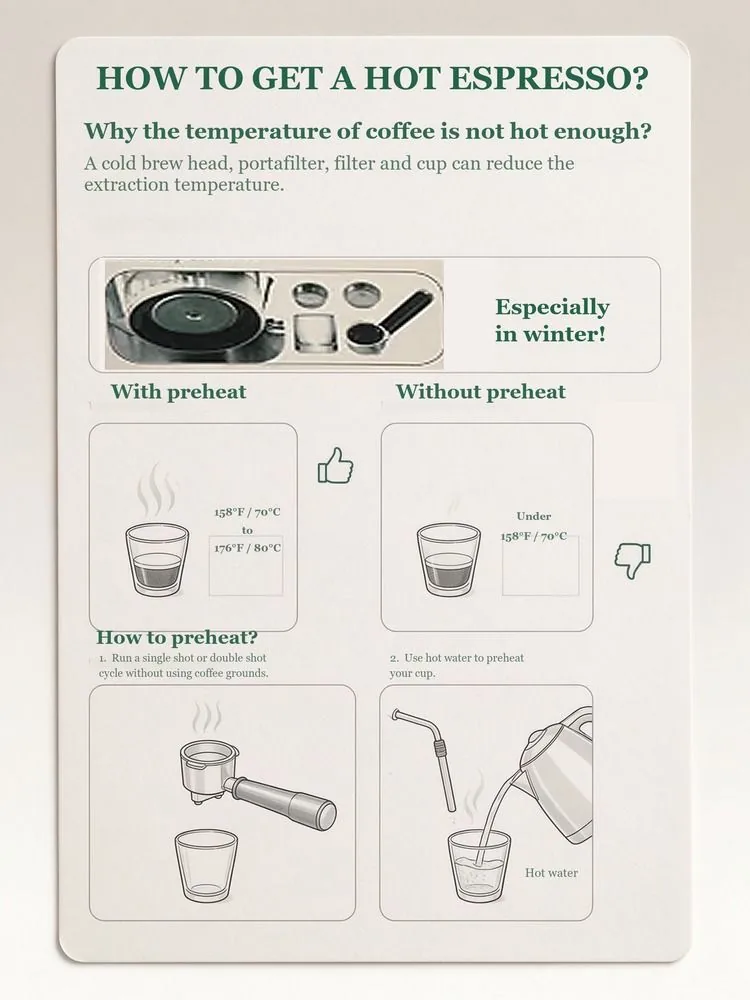
Specifications, included components, warranty terms, and troubleshooting notes are taken from the published listing as of November 7, 2026. The rating distribution and review themes are from the listing's own review summary. The cost-per-drink comparison is our arithmetic on commonly listed bean and milk prices, not a claim about any specific retailer. We also watched Keepa's chart for ASIN B09X3WGJ3R to see how much the listing normally moves. We have not bought or hands-tested this machine, so nothing here is first-hand testing. Product images on this page illustrate the machine and its instruction cards; they are not our own test photos, and the dimension graphic in the specification table is provided by the manufacturer. No figure here is presented as a lab measurement. Our method and disclosure explain how we research products and what that means for how you should read this page.
About Nurah Goods
Nurah Goods publishes kitchen and dining guides, including the ceramic vs stainless steel comparison and the tableware guides. For this article we worked from the manufacturer's published specification and instructions and from owner complaints rather than marketing copy, which is why the reliability section carries the most weight in the verdict.
Sources
- Casabrews CM5418 — retail listing: star distribution (71% five-star as read in November 2026), the one-year warranty statement, and the pump and pressure specifications
- Extraction pressure convention: espresso is brewed at roughly 9 bar, while the pump's rated maximum is the number printed on the box. This is general brewing practice, not a figure taken from the listing.
How this page was researched
This is a research-based review, not a hands-on test — we have not brewed with this machine. The reliability section is built from reading low-star owner reviews at volume and sorting them by what the reviewer was doing when the machine failed, which is why workflow complaints and hardware complaints are counted separately. Specifications and warranty wording come from the manufacturer's listing and instructions, read in November 2026.
Keep reading