Small Appliances · Buying guide
The 4 Specs That Actually Decide Your Espresso Machine
Four lines on an espresso listing decide whether you get real espresso or a coffee-flavored approximation: basket type, boiler count, temperature control and group size. Everything else, including the bar rating, is decoration.
Affiliate disclosure: Some links on this page are affiliate links. If you buy through them, we may earn a commission at no extra cost to you.
Quick verdict
- What decides the purchase: basket type first, boiler count second, temperature control third. The bar number decides nothing.
- What to ignore: "15 bar" or "20 bar" headlines, "professional" claims and star averages without a review count.
- The cheapest real upgrade: a 51 mm machine with a PID plus a separate burr grinder usually beats a 20 bar machine with a pressurised basket.
- Before you buy: measure cabinet clearance. Height is what sends machines back, not the shot quality.
Prices change daily — check the current price on the listing.
Check price at AmazonOpens the retailer's product page. Commission may be earned.
How this page was made: this is a buying guide, not a lab test. Every threshold here — brew pressure, basket behavior, boiler behavior, group size — is explained against the specifications published by the manufacturers of the machines we cover, checked in November 2026 and linked in Sources. We did not measure pressure, temperature stability or grind consistency on these machines. See how we research.
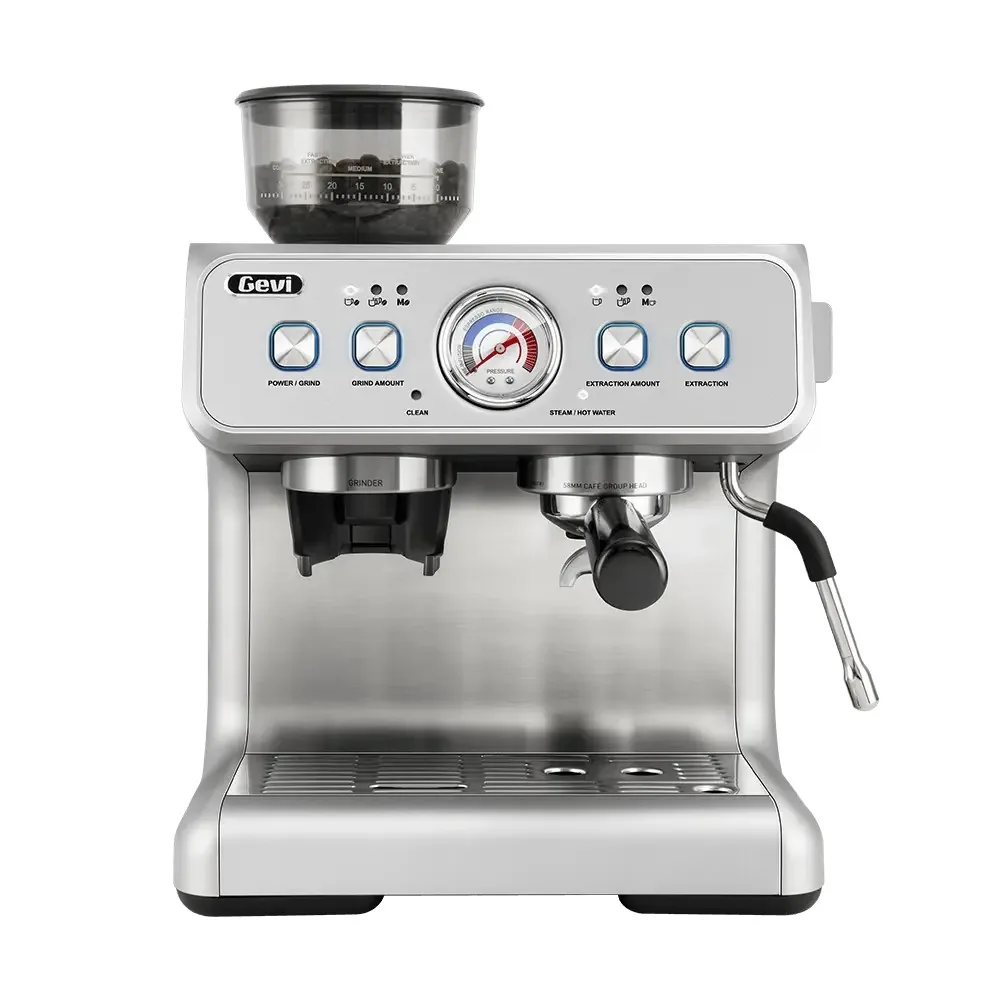
Manufacturer product image of the Gevi ECMF0, labelled 58MM CAFE GROUPHEAD above the portafilter — the group-head spec this guide asks you to check first. This site has not tested it. — Source: gevi.com
1. Bar ratings: a ceiling, not a flavor
Every machine on this site lists 20 bar, and so does almost every machine in this price band. That is because the number describes the pump's maximum output, not the pressure the water sees at the coffee. Espresso is brewed at roughly 9 bar, and machines regulate that with an over-pressure valve. A 20 bar pump gives the machine headroom for steaming and for descaling margin; it does not make the espresso 20 bar strong.
So when a listing leads with a bar number, it is telling you almost nothing. Two 20 bar machines can brew completely differently depending on the basket, the group head and the temperature control — which are the next three sections.
2. Basket type: the single line that decides everything
This is the most consequential spec on any espresso listing, and it is usually the least prominent. A pressurised basket has a valve underneath that fakes resistance, so it will produce something espresso-like from a coarse grind, an under-dose and a sloppy tamp. A non-pressurised (single-wall) basket has no valve: resistance comes from the coffee itself, so it reflects your grind, your dose and your tamp straight into the cup.
That splits buyers cleanly:
- You buy pre-ground coffee. Buy pressurised. A non-pressurised basket with supermarket grind produces watery shots and you will blame the machine.
- You own or will buy a burr grinder. Buy non-pressurised. It is the most reliable route to espresso that tastes like espresso, and it is why the machines we cover that ship with 58 mm single-wall baskets are worth more than their spec sheet suggests.
A non-pressurised basket is also the honest answer to "will this machine be better than my last one". It can produce better coffee and worse coffee in the same week, because nothing is compensating for you.
3. Boilers: one, two, or a thermoblock
Count the drinks you make back to back, then decide.
A single boiler shares one heating circuit: brew, then wait while it climbs to steam temperature, steam, then wait while it falls back. For one drink a day it is fine. For two milk drinks it costs you minutes and, more importantly, the second shot is pulled before the boiler has settled — so it tastes different from the first.
A dual boiler removes the queue entirely: steam and brew are separate circuits. If you make two cappuccinos every morning, this is the line item you are actually paying for, and everything else on the machine is secondary. If you drink one straight shot, it is money spent on something you never feel.
4. Temperature control: PID or thermostat
A thermostat switches a heater on and off around a target, so the actual water temperature swings in a band. A PID controller holds it within a degree or two, and on better machines you can also shift the setpoint for a darker or lighter roast.
Whether you feel that depends on the basket. With pressurised baskets and pre-ground coffee, temperature swings hide behind the valve. With non-pressurised baskets and a decent grinder, a two-degree drift is the difference between sweet and sharp. Our rule: if the machine has a non-pressurised basket, demand a PID. If it does not, spend the money elsewhere.
5. Group size: 51 mm or 58 mm
Fifty-eight millimeters is the commercial standard and the practical reason is accessories: baskets, tampers, distribution tools and bottomless portafilters are cheapest and most available in 58 mm. A 51 mm group head works, doses slightly differently and has a thinner accessory market — which matters if you plan to keep upgrading.
The distinction is not about the size of the shot. It is about how much you can change later. Fifty-one millimeters is fine for a machine you intend to leave alone; 58 mm matters only if you plan to add baskets and bottomless portafilters later.
6. Height, clearance and the tank
Measure first. The machines we cover run from about 12 inches to 16.5 inches tall, and the taller ones need a bean hopper on top. Most upper cabinets sit around 18 inches above the counter. A 16.5-inch machine fits — barely — and leaves no room to pour beans without pulling it forward.
Then look at the water tank. A small tank on a tall machine is a bad pair, because refilling usually means moving the machine, and moving it means re-levelling the cup tray. If you drink two drinks a day, a 1.3 L tank is about a week of use; a 2.8 L tank buys you a second week. Neither is a reason to pick a machine, but a tiny tank on a heavy machine is a daily annoyance.
What to ignore on the listing
- "15 bar" or "20 bar" as a headline feature. See section 1.
- "Professional" anywhere. It means the housing is stainless steel.
- Automatic milk frothing. Convenient, but the tube is the first thing to clog and the last thing to be cleaned. A manual wand is more work and much more durable.
- Built-in grinders, framed as a saving. It saves a purchase and a footprint, but the grinder is the component people outgrow first, and on a built-in machine outgrowing it means replacing the machine.
- Star averages without a review count. A 4.3 from 3,800 ratings means something; a 4.6 from 14 does not.
Which machine fits which routine
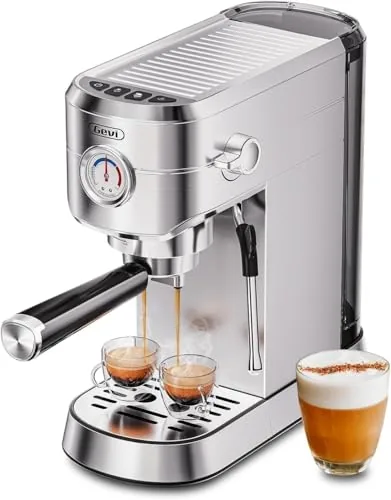
| One shot a day, small counter, budget first | Gevi 20 Bar Compact — 51 mm, PID, 12.3 in deep. A single boiler is the right spend here. |
|---|---|
| Two milk drinks every morning | Gevi Dual Boiler (ECMF0) — steam and brew stop competing; check the 16.5-inch height first. |
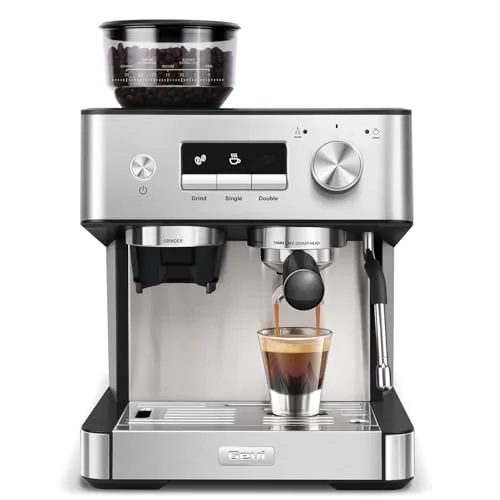
| You want a real basket and a grinder in one box | Gevi 20 Bar with built-in grinder — 20 bar, 35-step conical burr, published specs partly unpublished. |
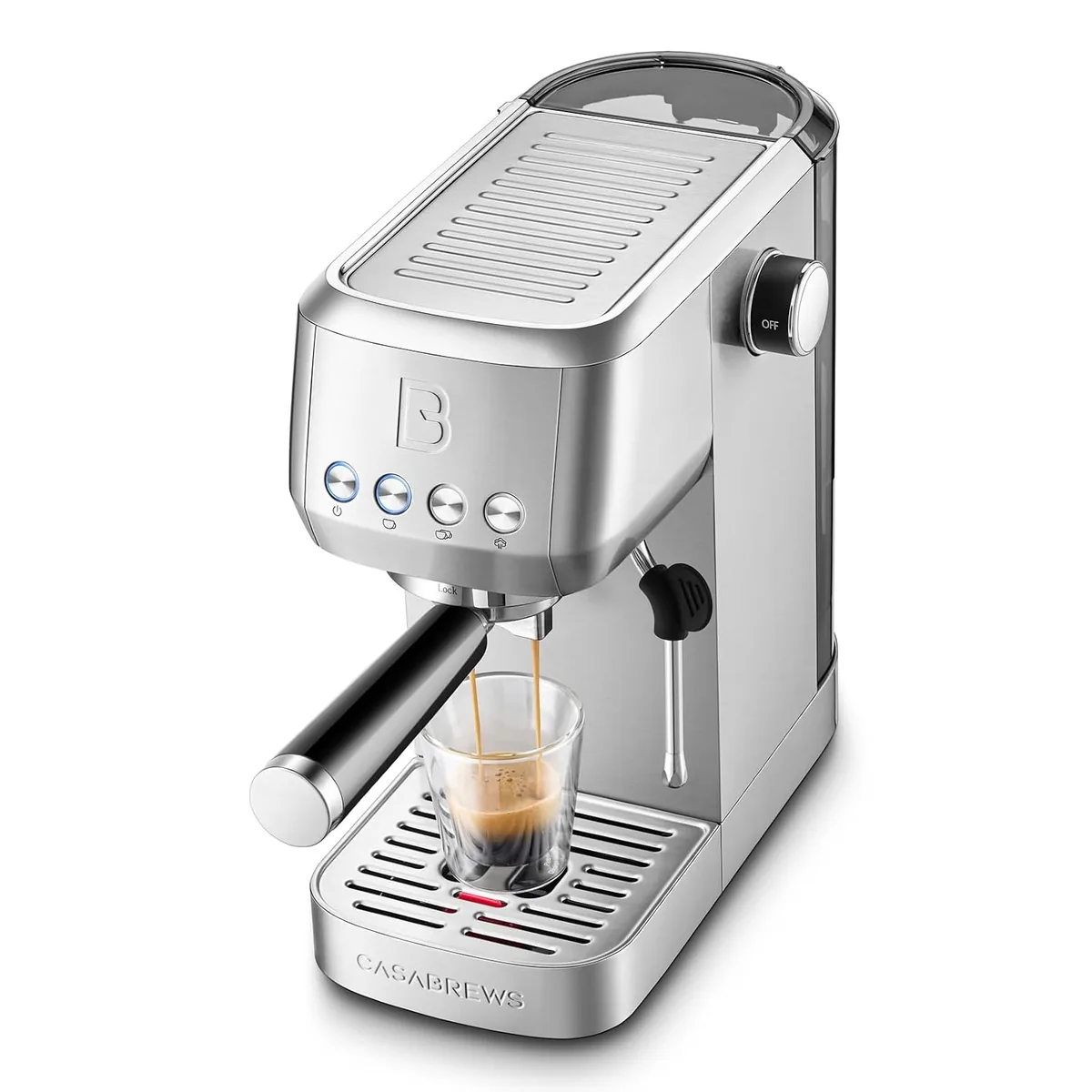
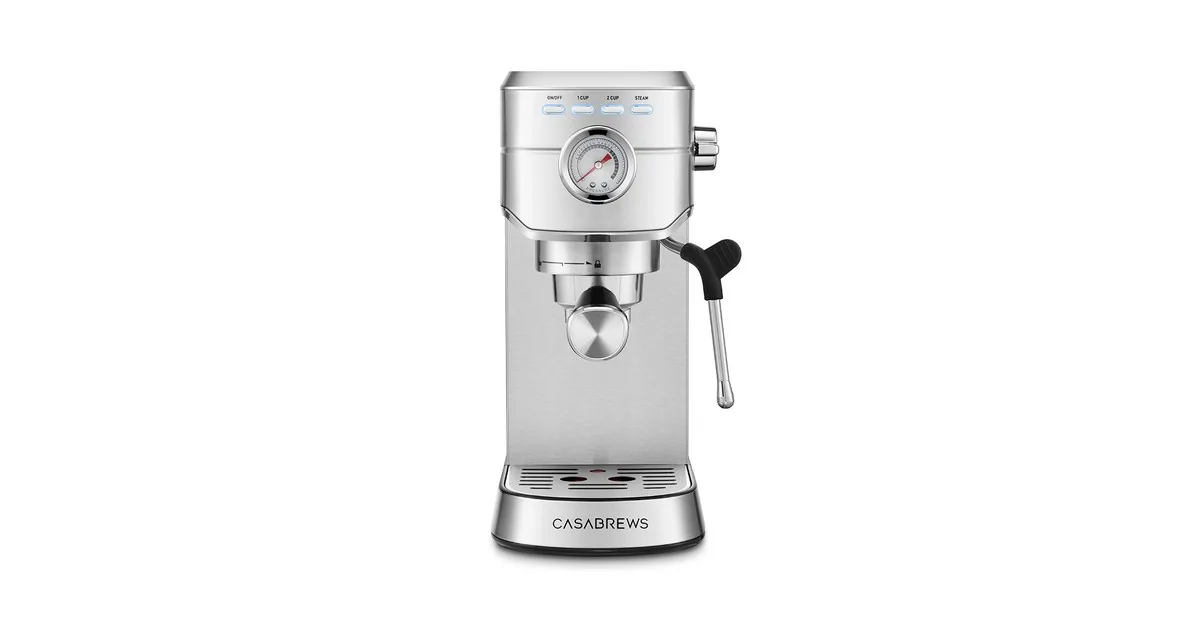
| You want the cheapest real espresso workflow | Casabrews CM5418 plus a separate grinder — 51 mm, PID and pre-infusion at the low end. |
| You only ever drink filter coffee | Gevi 10-Cup Grind & Brew — buying an espresso machine for this is the wrong purchase. |
For the machines we would actually shortlist in one price band, see the under-$200 roundup. For the grinder question, see three ways to get fresh-ground coffee.
Bottom line
Read the basket line before anything else, then count the drinks you make back to back, then measure your cabinet. Those three answers pick the machine; the bar rating on the box does not. If you want the shortest version of this guide: a 51 mm machine with a PID and a separate grinder will beat a 20 bar machine with a pressurised basket at similar money, in our experience.
Frequently asked questions
Is 20 bar better than 15 bar?
Not for espresso. Brew pressure at the puck is regulated by an over-pressure valve, and the target for espresso is around 9 bar. A higher pump rating mostly buys headroom for steam and descaling margin. Two machines with 20 bar pumps can brew completely differently, so treat the number as a ceiling rather than a feature.
Pressurised or non-pressurised basket — which should a beginner buy?
Pressurised is easier: it produces something espresso-like from a coarse grind and an uneven tamp, which is why cheap machines ship with it. Non-pressurised tastes better once your grind is right and is unforgiving when it is not. If you already own a burr grinder, buy non-pressurised. If you buy pre-ground coffee, buy pressurised or expect frustration.
Do I need a dual boiler?
Only if you make two or more milk drinks in a row. A single boiler shares one heating circuit between brewing and steaming, so the second shot arrives at a temperature the boiler has not settled back to. For one drink a day, a single boiler does the same job for less.
Does a PID actually matter?
It matters more as the machine gets better. A PID holds brew temperature within a degree or two; a plain thermostat swings wider. With a pressurised basket and pre-ground coffee you will not taste the difference. With a non-pressurised basket and a good grinder, you will.
How much counter space should I reserve?
Measure the height first, then the depth. Machines in this class run 12 to 17 inches tall before the bean hopper, and most upper cabinets sit about 18 inches above the counter. Height is the reason machines get returned, not width.
Sources
- Gevi: espresso range comparison table — pump rating, basket type, group size, boiler count across models
- Gevi: Dual Boiler ECMF0 product page — dual boiler, 58 mm non-pressurised baskets, PID with NTC
- Casabrews: 3700 Essential product page — 20 bar, 51 mm group head, 1.3 L tank
- Retail listing: Gevi 20 Bar Compact — published specs and owner ratings
- Retail listing: Gevi dual boiler model profiled on this site
How this page was researched
Research-based profile, not a hands-on test. We did not measure pressure, grind consistency, temperature stability or brew time. Specifications come from the manufacturer's and retailer's published pages; where a value is not published we say so instead of estimating it. Prices and availability change without notice — confirm on the listing before buying.